

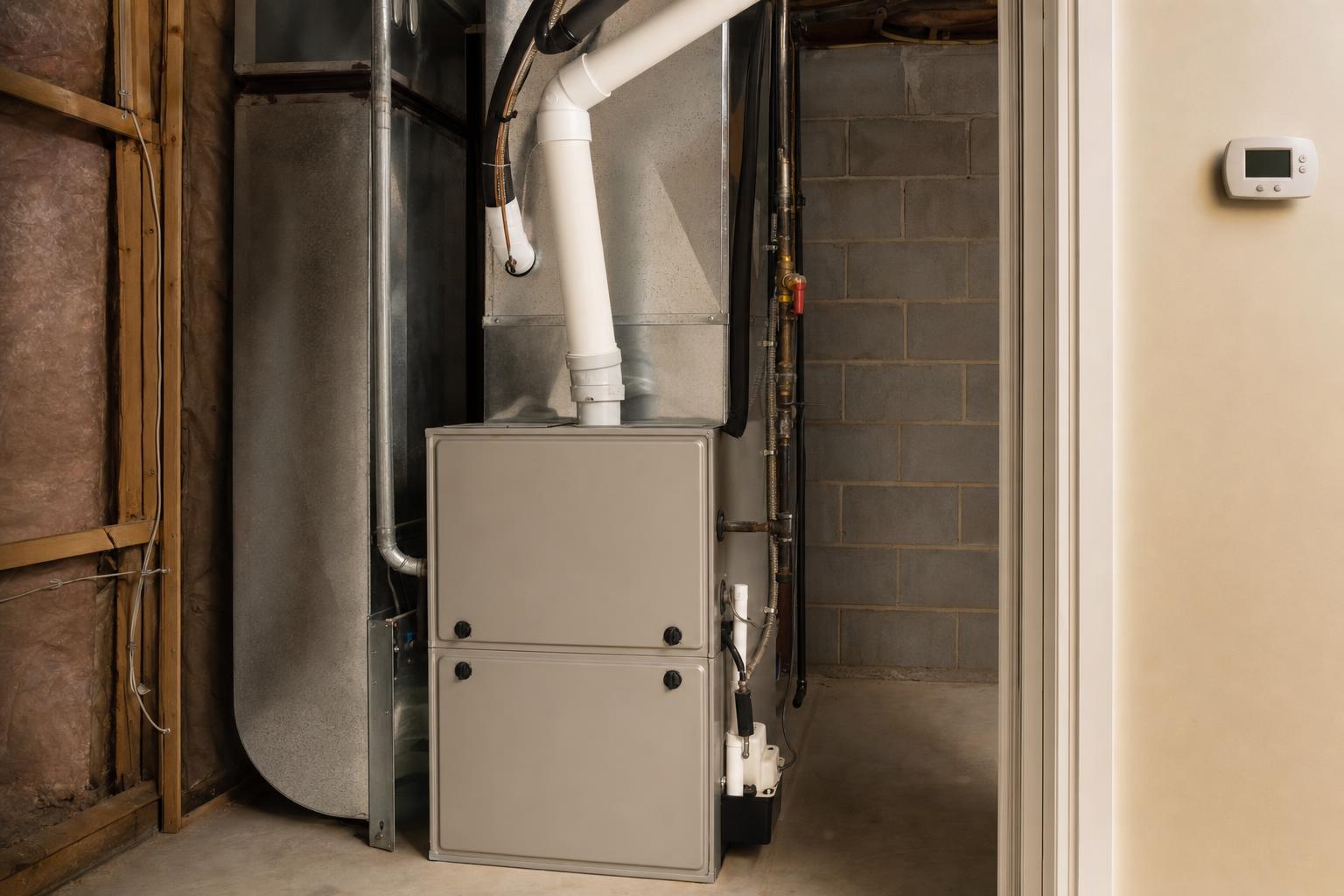
A furnace blowing cold air can mean something as simple as the thermostat fan setting, but it can also signal lost ignition, restricted airflow, or a safety shutdown. The useful question is not just whether the air feels cool. Notice when the problem starts, whether the burner runs, how long each cycle lasts, and whether every register is affected.
Homeowners in Oshawa and Durham Region can safely check a few visible controls before requesting service. Stop if you smell natural gas, see smoke, hear a carbon-monoxide alarm, or find repeated ignition attempts. Leave the home for a suspected gas or carbon-monoxide emergency and contact the gas utility or emergency services from a safe place.
First Confirm the Thermostat Is Asking for Heat
Set the thermostat to Heat and raise the target a few degrees above the room temperature. If the fan setting is On, the blower can circulate room-temperature air between heating cycles. Change it to Auto and wait for a new call for heat. This is the quickest way to rule out normal fan operation that feels like a heating failure.
Check the thermostat display for a low-battery symbol, schedule override, error message, or an unexpected away setting. Smart thermostats may also delay equipment briefly to protect it. Do not remove equipment panels or bypass a delay. Record the message and wait for the normal cycle to begin.
A Dirty Filter Can Interrupt a Heating Cycle
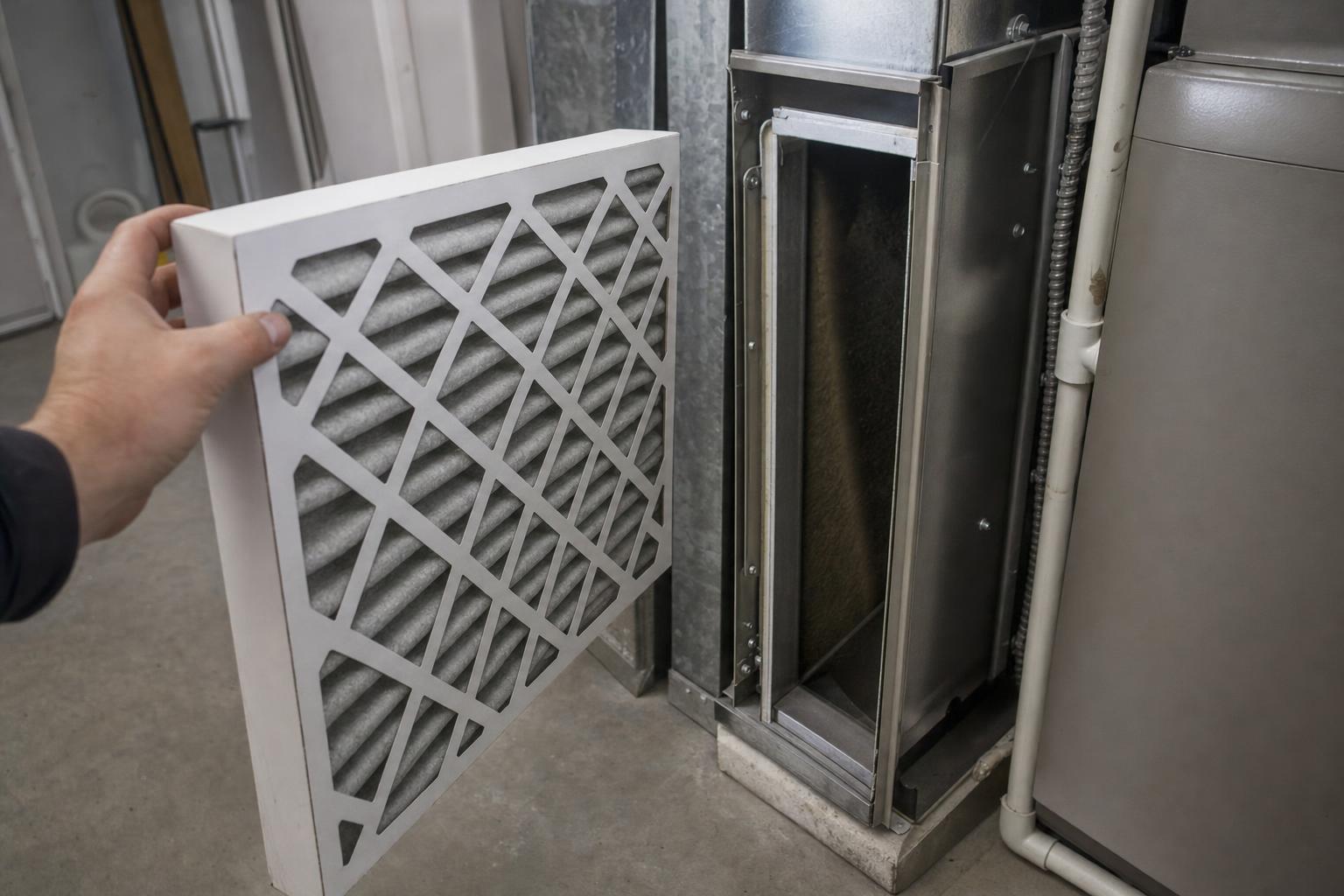
A clogged filter restricts airflow through the furnace. When heat cannot move away from the equipment as designed, a temperature limit may shut the burners off while the blower keeps running. The air at the registers then becomes cooler even though the thermostat still calls for heat.
Turn the system off before checking the filter. Confirm the size and airflow arrow, and replace a visibly loaded filter with the type recommended for the equipment. A filter with a higher rating is not automatically better if it adds too much resistance. If a new filter does not restore a normal cycle, the airflow problem may involve the blower, return air, ductwork, or another component that needs testing.
Closed Registers and Blocked Returns Change Airflow
Walk through the home and make sure supply registers are open and return grilles are not covered by furniture, rugs, boxes, or curtains. Closing many registers does not redirect heat efficiently. It can increase pressure and reduce the airflow the furnace needs.
Compare rooms rather than focusing on one vent. Cold air from every register points toward a system-level issue. One consistently cool room may instead involve a closed damper, disconnected or leaking duct, insulation gap, or an airflow-balancing problem. Fortis offers custom ductwork service when the equipment operates but the home does not receive heat evenly.
Ignition or Fuel Problems Need Professional Diagnosis
A gas furnace must confirm several conditions before the burners remain on. The exact sequence varies by model, but a failed igniter, dirty flame sensor, pressure-switch issue, venting problem, gas-supply interruption, or control fault can stop heat production. The blower may still run as the furnace attempts to complete or recover from the cycle.
Observe the furnace only from outside the cabinet. Note whether it starts, stops, retries, or displays a status code through a viewing window. Do not open the burner compartment, clean an igniter or flame sensor, adjust gas controls, or reset the equipment repeatedly. Those steps can damage parts or interfere with safety controls.
Enbridge Gas appliance-safety guidance recommends annual inspection of fuel-burning appliances by a registered contractor and keeping vents and air openings clear. A technician can test the ignition sequence, combustion, venting, temperature rise, airflow, and safety controls rather than replacing parts based on a symptom alone.
Heat Pumps Can Produce Cooler-Feeling Air
If the home uses a heat pump, the supply air may feel less hot than air from a gas furnace even when the system works normally. Heat pumps often deliver steady, moderately warm air for longer cycles. During a defrost cycle, the outdoor unit temporarily changes operation, and the indoor system may use supplemental heat depending on its design.
The important test is whether the room temperature rises and the cycle completes. If the thermostat never reaches its setting, the outdoor unit stays heavily iced, backup heat runs constantly, or the system repeatedly switches modes, arrange service. Our heat pump service page explains the installation and repair support available in Durham Region.
Use the Pattern of the Problem to Describe It
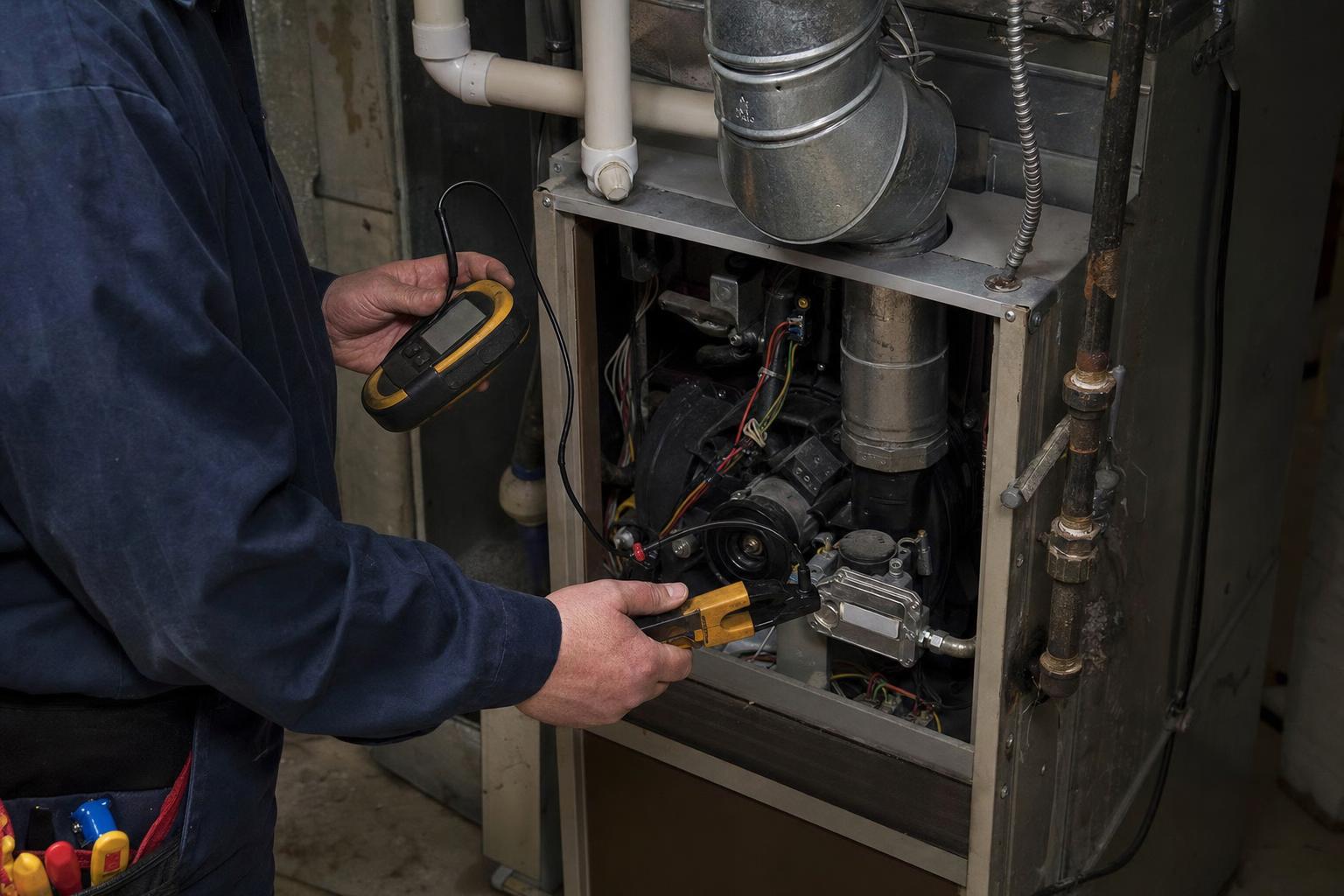
Before calling, write down when the cold air begins and what happens next. Useful details include whether the issue follows a filter change, power outage, thermostat update, renovation, or first seasonal startup. Note any unusual noise, smell, blinking code, breaker trip, weak airflow, or room-to-room difference.
Also check whether hot water and other gas appliances work normally, without touching their controls. A broader utility interruption is different from a fault limited to one furnace. Share observations rather than a guessed diagnosis; the pattern helps the technician choose the right tests and parts.
Keep the area around the furnace clear while you observe it. Boxes, stored chemicals, and laundry can obstruct access or introduce combustible material near heating equipment.
When to Turn the Furnace Off
Turn the system off and request prompt service if it repeatedly starts and stops, blows cold air through several failed cycles, makes scraping or electrical sounds, trips a breaker, or produces a persistent burning smell. Do not keep resetting it to preserve heat. Repeated resets can hide the sequence that reveals the fault.
For a rotten-egg or sulphur smell, leave immediately without operating switches or phones indoors. For a carbon-monoxide alarm or symptoms such as headache, dizziness, nausea, weakness, confusion, chest pain, or shortness of breath, move everyone to fresh air and follow emergency guidance. Carbon monoxide has no smell, so the absence of an odour does not prove a fuel-burning appliance is safe.
Frequently Asked Questions About a Furnace Blowing Cold Air
Why does the furnace start warm and then blow cold?
The burners may be shutting off while the blower continues. Restricted airflow, an ignition or flame-sensing fault, overheating, or a control issue can produce that pattern. A technician needs to test the cycle to identify the cause.
Can a thermostat cause cold air from the vents?
Yes. The fan may be set to On, the thermostat may be in the wrong mode, or a schedule or battery problem may prevent a proper heat call. If the settings are correct and the issue continues, the fault may be elsewhere.
Should I replace the filter before calling?
You can replace a dirty filter with the correct size and approved type after turning the system off. If the furnace still cannot complete a normal heating cycle, stop there and request service.
Is cooler air normal from a heat pump?
Heat-pump air can feel cooler than furnace air while still warming the home. It is not normal when the room temperature keeps falling, ice does not clear, or the system cannot reach the thermostat setting.
Request Furnace Repair in Oshawa
If your furnace is blowing cold air after the thermostat, filter, and visible registers are checked, Fortis Heating & Air Conditioning can test the complete heating cycle. Review our furnace repair service, then contact Fortis or call (289) 688-4822 to schedule service across Oshawa and Durham Region.