

Tankless water heater prices vary more than most Oshawa homeowners expect, and it usually comes down to more than just the unit itself. Two homes requesting the same brand of tankless water heater can land on very different installed prices once venting, gas line capacity, and installation complexity are factored in.
Rather than quote a single number that would be wrong for most households, this guide walks through what actually drives tankless water heater installation cost in Durham Region, so you know what questions to ask and what a fair, written quote should cover.
Why Tankless Water Heater Installation Cost Varies So Much
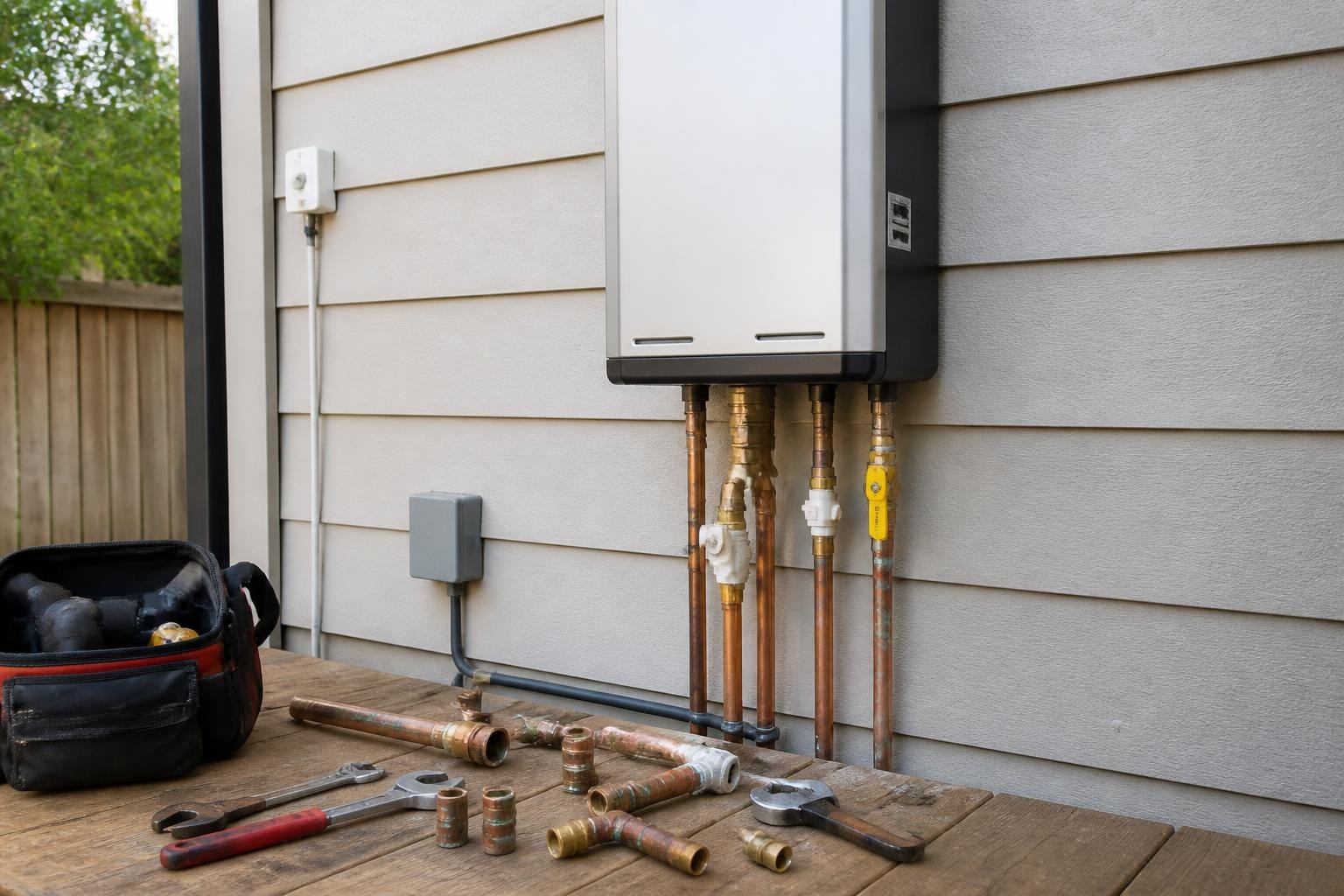
A tankless water heater heats water on demand rather than storing it in a tank, and that fundamental difference in how the equipment works is part of why installation pricing looks different from a conventional hot water tank quote. The final number depends on whether you are replacing an existing tankless unit, converting from a tank system for the first time, and whether your home’s gas line and venting can support the new equipment without modification.
Each of those paths involves different labour hours and different material requirements, which is why two “tankless water heater installation” quotes can look nothing alike even for similarly sized homes.
Unit Size and Capacity
Tankless water heaters are sized by flow rate, measured in gallons or litres per minute, based on how many fixtures need hot water at the same time and your household’s peak demand. A unit sized for a single bathroom is a different investment than one sized to serve a larger home running multiple showers, a dishwasher, and a washing machine simultaneously.
Undersizing a tankless unit is a common and frustrating mistake, since it can leave a household without enough hot water during peak usage, while oversizing adds unnecessary equipment cost. A proper assessment of your home’s fixture count and usage patterns is what allows a contractor to size the unit correctly instead of guessing.
Gas vs. Electric Tankless Units
Gas-fired tankless water heaters generally have a higher upfront equipment and installation cost than electric models, largely due to the venting and gas line work involved, but they typically offer a higher flow rate for larger households. Electric tankless units usually cost less to install but may require an electrical panel upgrade to supply the amperage they need, particularly in older Oshawa homes.
Choosing between the two often comes down to your home’s existing gas line and electrical capacity as much as personal preference, which is another reason an in-home assessment leads to a more accurate quote than a general estimate.
Venting Requirements
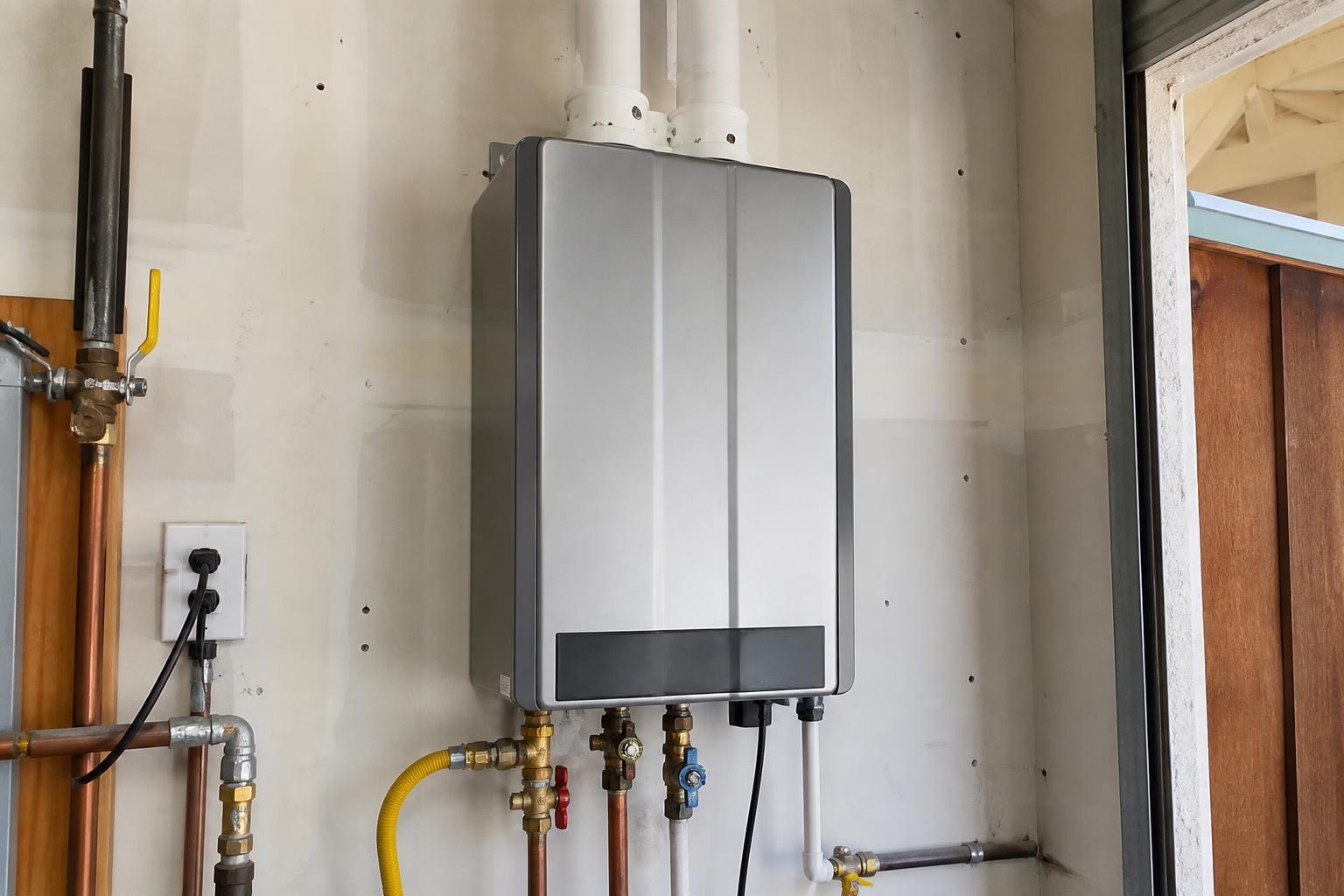
Gas tankless water heaters need proper venting to safely exhaust combustion gases, and venting requirements vary depending on the unit’s location in the home and how far it sits from an exterior wall. Direct-vent models that pull in outside air for combustion are common in tankless installations and often require specific vent pipe materials and clearances.
If your installation location requires a longer vent run, additional wall penetrations, or vent material upgrades to meet code, that work is reflected in the installed price. This is also closely tied to gas line capacity: some older homes need gas line upgrades to properly supply a tankless unit’s higher demand compared to a standard tank.
Retrofit vs. New Construction Installation
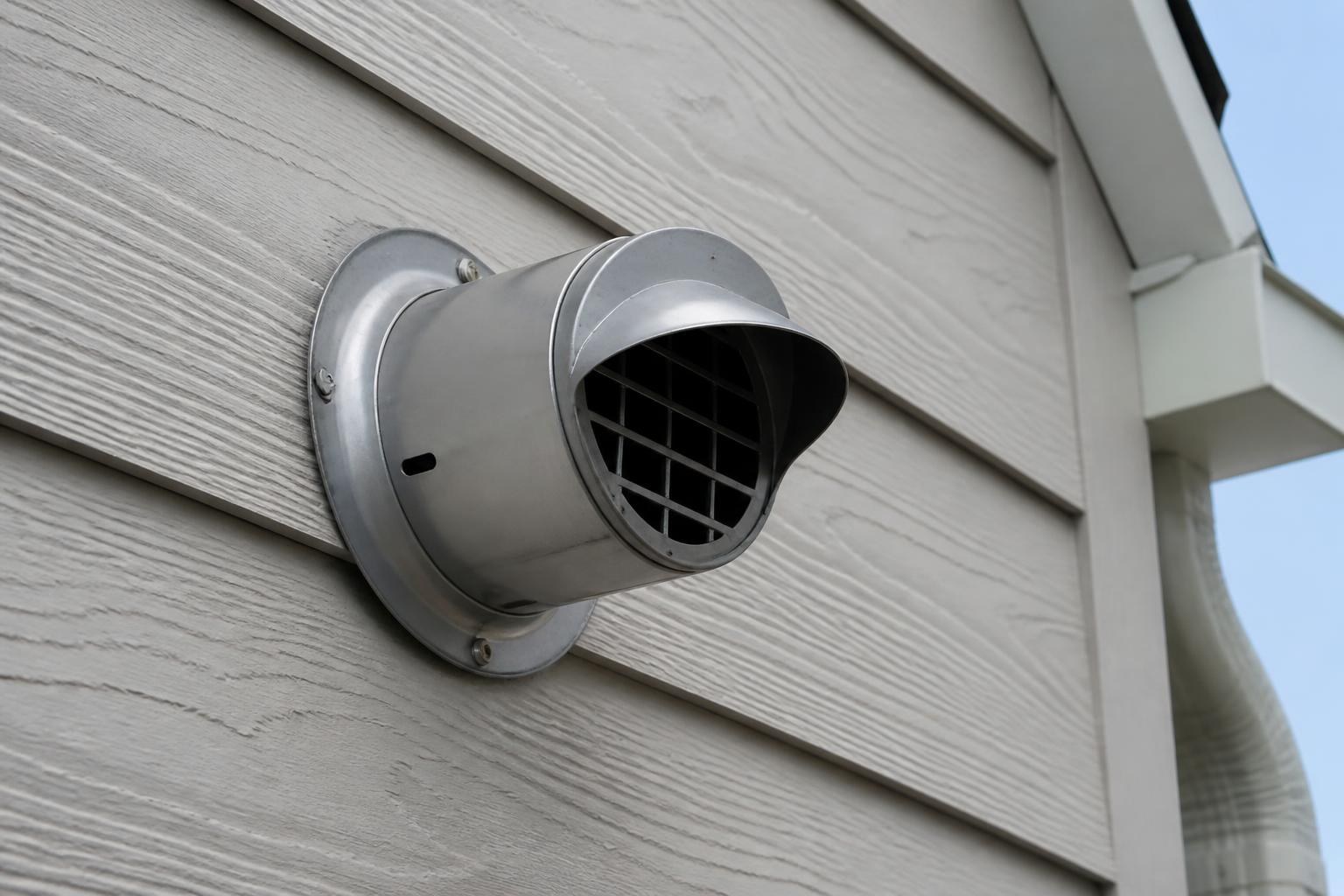
Installing a tankless water heater as a retrofit in an existing home is typically more involved than installing one during new construction or a full renovation, since a retrofit often means adapting existing gas lines, venting, and wall space to a unit that was not part of the original design. Converting from a conventional tank system to tankless for the first time usually requires more labour than replacing an existing tankless unit with a similar model, since the tank system’s venting and connections are not typically compatible without modification.
Wall space and mounting location also factor into a retrofit quote. A tankless unit mounted close to an exterior wall, with a short, direct run to a vent termination, is generally a simpler install than one that has to be positioned farther from an exterior wall to fit the available mechanical room layout. Homeowners converting from a tank system also free up floor space once the old tank is removed, which is a secondary benefit worth factoring in alongside the installed cost.
Permits and Code Compliance
Gas-fired tankless water heater installations in Ontario typically require a permit and inspection to confirm the gas line, venting, and equipment meet current code requirements. Permit fees and inspection scheduling are part of a properly quoted installation, and a contractor who skips this step is cutting corners that can create problems if you ever sell the home or file an insurance claim.
Energy Efficiency and Potential Rebates
Tankless water heaters are generally more energy-efficient than conventional tank systems since they avoid the standby heat loss of keeping a full tank of water hot around the clock. ENERGY STAR® certified tankless models meet specific efficiency criteria, and some Ontario rebate programs have periodically offered incentives for qualifying high-efficiency water heating equipment. Rebate availability changes over time, so it is worth confirming current programs before assuming a discount applies to your project.
What a Fair, Written Tankless Installation Quote Should Include
A trustworthy quote goes beyond a single number on a page. Look for a written estimate that spells out the specific unit model and flow rate, whether gas line or electrical upgrades are included, venting materials and routing, permit and inspection fees, and warranty terms. A clear quote should always name the actual equipment being installed rather than a generic placeholder, and should note whether your installation is a retrofit or a straightforward replacement.
If a quote seems unusually low compared to others you have received, it is worth asking directly what is and is not included, since missing scope, such as a needed gas line upgrade or extra venting, is one of the most common reasons an installed price changes after the work has already started.
Frequently Asked Questions
What is the average cost to install a tankless water heater in Ontario?
Installed cost depends heavily on whether the unit is gas or electric, whether it is a retrofit or replacement, and what gas line or venting work is needed, which is why an accurate number comes from an in-home assessment rather than a general average.
Do I need a bigger gas line for a tankless water heater?
Sometimes. Tankless units generally have higher peak gas demand than a conventional tank, so older gas lines sized for a tank system may need to be upgraded, which is best confirmed during an in-home assessment.
Is switching from a tank to tankless expensive?
A first-time conversion typically costs more than replacing an existing tankless unit, since it usually involves adapting gas lines, venting, and wall space that were not originally designed for tankless equipment.
Do tankless water heaters need a permit in Ontario?
Gas-fired tankless installations typically require a permit and inspection to confirm the gas line, venting, and equipment meet current code requirements.
If you are weighing a tankless water heater installation or conversion for your Oshawa or Durham Region home, our team can assess your existing gas line, venting, and household usage, then put together a written quote that spells out equipment, installation type, and any applicable rebates. Call Fortis Heating & Air Conditioning at (289) 688-4822 or request an appointment online to schedule your assessment.