

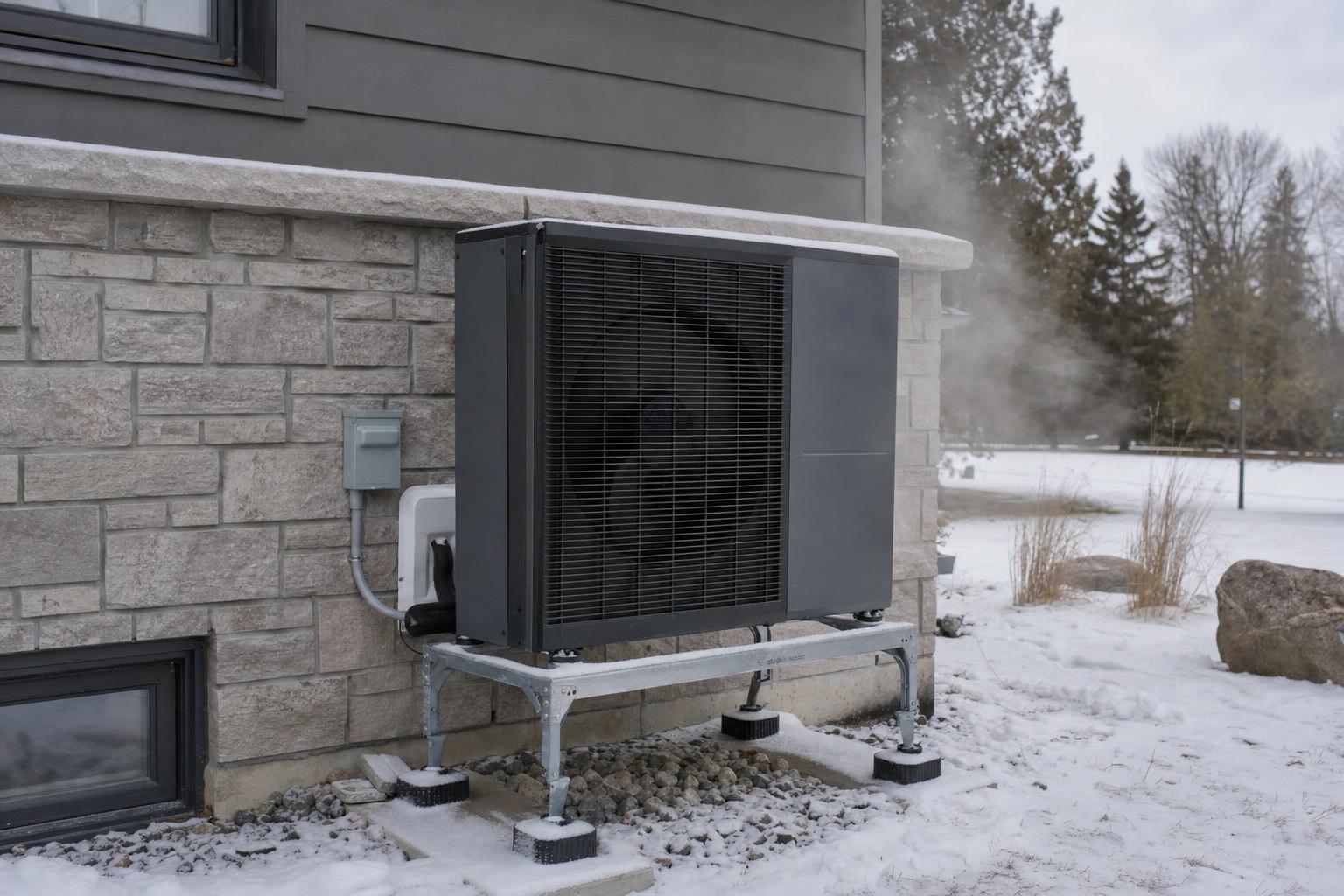
Steam rising from an outdoor heat pump on a cold day can look alarming, especially when the fan stops and the unit makes a different sound. Often, that is a normal heat pump defrost cycle. The system is briefly melting frost from the outdoor coil so it can keep transferring heat efficiently.
Normal defrost is short and occasional. Thick ice that never clears, repeated cycles, a fan striking ice, or falling indoor temperature can point to a fault. This guide explains what homeowners in Oshawa and Durham Region can observe safely and when the system needs service.
Why Frost Forms on an Outdoor Heat Pump
In heating mode, the outdoor coil is colder than the surrounding air. Moisture can condense and freeze on that coil when temperature and humidity conditions line up. A light, even layer of frost is expected. If it stayed in place, it would restrict airflow and insulate the coil, making heat transfer less effective.
The defrost control monitors operating conditions and starts a cycle when needed. Designs differ, so there is no universal interval or exact duration that applies to every model. Weather, equipment size, coil condition, airflow, and control settings all influence when defrost occurs.
What a Normal Defrost Cycle Looks and Sounds Like
During defrost, the heat pump temporarily reverses operation to warm the outdoor coil. The outdoor fan may stop while the compressor continues. You may hear a whoosh as refrigerant flow changes, see water draining below the unit, or notice a cloud of water vapour as frost melts.
The cloud should dissipate like steam, not smell like smoke. Frost should visibly reduce, and the unit should return to heating mode. Depending on the system, supplemental heat may operate indoors to reduce cool air during the cycle. A brief change in supply-air temperature can therefore be normal.
Defrost Is Different From a Heat Pump Frozen Solid
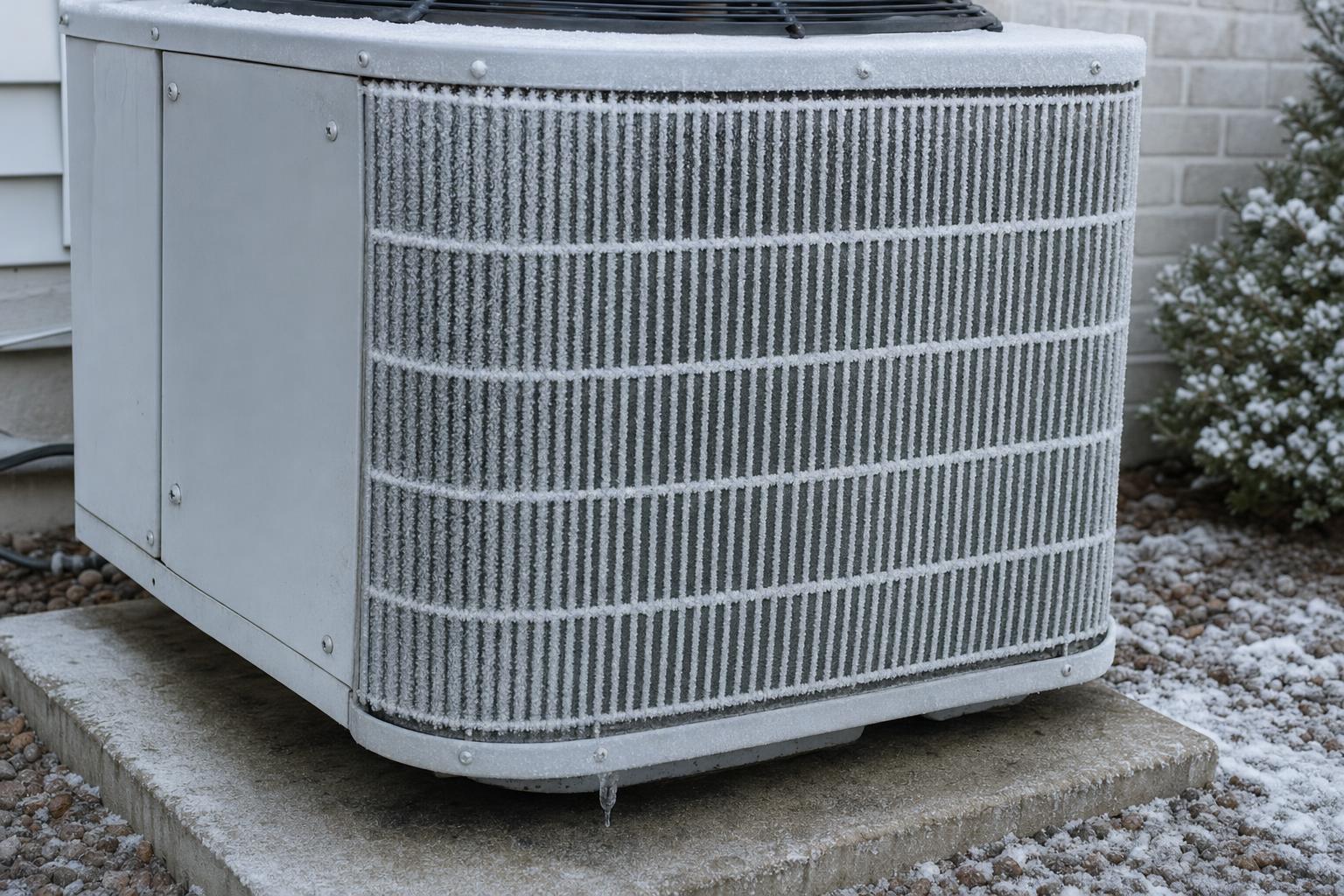
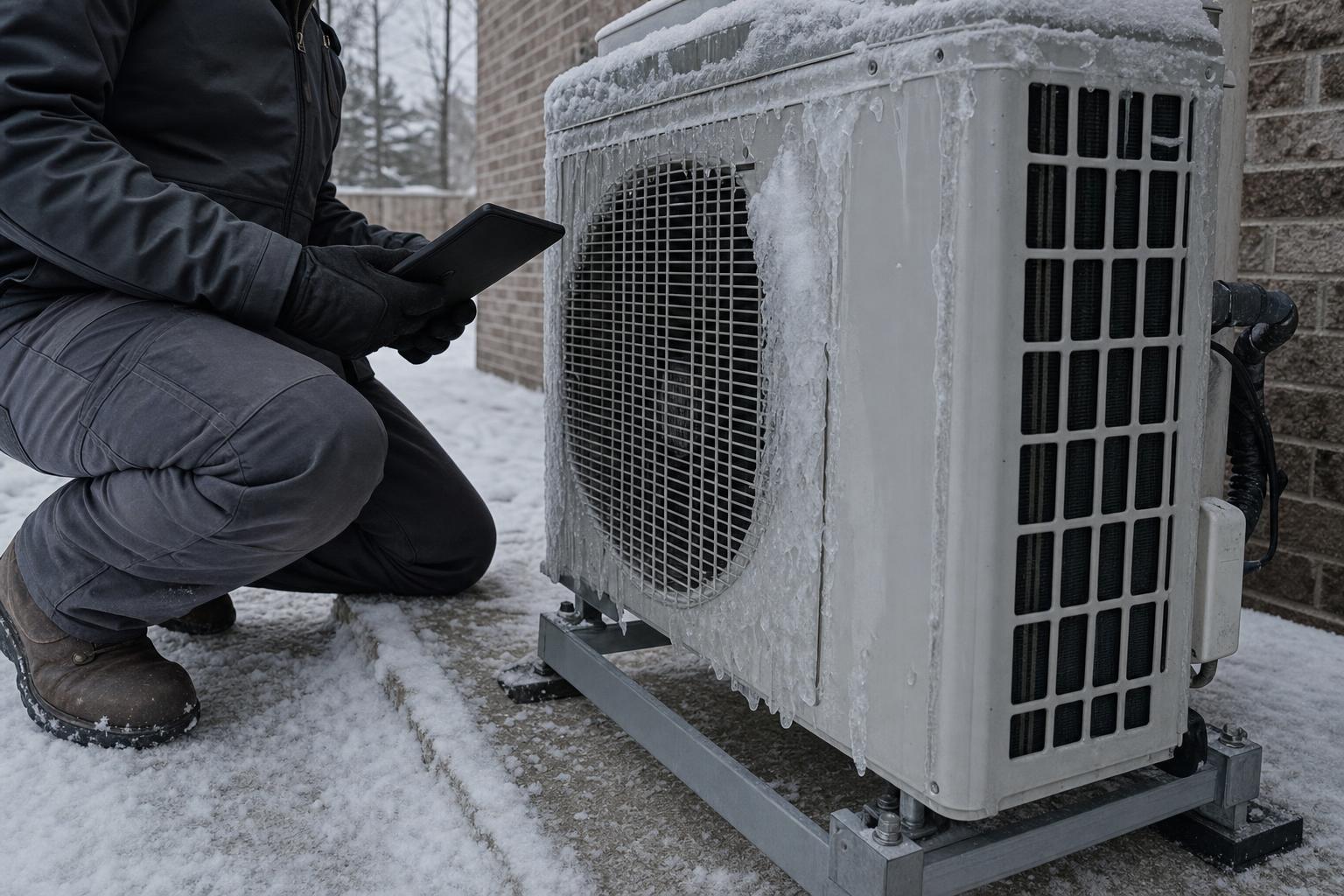
A normal cycle removes frost. A problem leaves heavy ice across the coil, cabinet, fan grille, or base for an extended period. The unit may run without clearing, defrost repeatedly, make contact noises, or stop producing enough heat indoors.
Possible causes include a failed sensor or control, low refrigerant charge, outdoor-fan problem, blocked coil, poor drainage, or a reversing-valve fault. Ice can also build when roof runoff, a downspout, or melting snow drains onto the equipment and refreezes. Those causes require different corrections, which is why diagnosis should begin with observation and testing rather than chipping away the ice.
Clear Snow and Debris Without Touching the Coil
After snowfall, keep the area around the outdoor unit clear enough for air to enter and discharge freely. Remove loose snow from the surrounding ground with a broom or shovel while keeping tools away from the coil and refrigerant lines. Confirm that the unit is not buried by drifting snow or blocked by leaves, storage, or a cover.
Do not use a sharp tool, hammer, boiling water, hair dryer, torch, or chemical de-icer on the equipment. The coil fins and refrigerant tubing can be damaged easily, and electrical parts are present. Do not run the system with a winter cover over the unit unless the manufacturer specifically designed the cover for operation.
Natural Resources Canada describes heat pumps as systems that transfer heat rather than create it directly and provides homeowner information about cold-climate operation in its heat-pump heating and cooling guide. Follow the equipment manual for snow clearances and maintenance because model requirements vary.
Check Indoor Comfort During Cold Weather
A defrost cycle should not cause the home to lose heat for a long period. Watch the thermostat rather than judging only by how the air feels at one register. Heat-pump supply air is often less hot than furnace air, so a steady room temperature is a better sign of normal performance.
If the temperature keeps dropping, supplemental heat runs continuously, or the thermostat reports a fault, note the outdoor conditions and request service. Do not change installer settings or force emergency heat as a routine workaround. Emergency or auxiliary heat may cost more to operate and can hide the original problem.
Drainage Matters After the Frost Melts
Defrost creates water. The base and surrounding area need a path for that water to drain without refreezing against the coil or creating a thick slab under the unit. A properly elevated installation helps keep the heat pump above normal snow and drainage levels.
Look from a safe distance for blocked drainage, a tilted pad, roof runoff, or ice growing from below. Do not reach into the base or move the unit. A technician can check the installation, base-pan drainage, and any model-specific cold-weather accessories if ice repeatedly returns in the same place.
Maintenance Helps the System Read Conditions Correctly
Dirty coils and restricted airflow make it harder for the system to exchange heat. Annual service can include checking coil condition, the outdoor fan, electrical connections, refrigerant performance, drainage, sensors, controls, and the change between heating and defrost modes. It also gives the technician a chance to compare operation with the manufacturer’s specifications.
Homeowners can support that work by keeping the equipment visible and accessible, replacing indoor filters as directed, and recording when unusual icing occurs. A photo taken from outside the safety clearance can help show a pattern that disappears before the appointment.
Fortis offers HVAC maintenance and heat pump installation and repair across Durham Region. Maintenance reduces avoidable airflow and cleanliness problems, but it cannot guarantee that a sensor, motor, valve, or control will never fail.
Signs the Heat Pump Needs a Service Call
Request service when the outdoor coil remains encased in ice, frost returns almost immediately after clearing, defrost cycles occur unusually often, the outdoor fan does not restart, the unit makes grinding or striking sounds, a breaker trips, or indoor temperature falls despite continuous operation.
Turn the system off if the fan is hitting ice, wiring appears damaged, the unit produces a burning smell, or the equipment vibrates severely. Do not remove panels. Share the thermostat setting, outdoor temperature, weather conditions, how long the ice has been present, and any code displayed by the thermostat or unit.
Frequently Asked Questions About Heat Pump Defrost
Is steam from the outdoor heat pump normal?
A brief cloud of water vapour can be normal as frost melts during defrost. Smoke, an electrical smell, or vapour that continues with abnormal operation should be treated as a reason to shut the equipment off and request help.
How often should a heat pump defrost?
There is no single safe interval for every unit. The control responds to model design and operating conditions. Repeated cycles with poor heating or ice that never clears need professional assessment.
Can I pour warm water on an iced heat pump?
No. Rapid temperature change and water near electrical components can damage the equipment or create more ice. Keep surrounding snow clear and let a technician address persistent buildup.
Should I switch to emergency heat when the unit defrosts?
No. Normal defrost is automatic. Emergency heat is not a routine defrost setting. Use thermostat modes only as the manufacturer or a qualified technician directs.
Schedule Heat Pump Repair in Durham Region
If your heat pump defrost cycle no longer clears the outdoor coil or your home is losing heat, Fortis Heating & Air Conditioning can test the controls and cold-weather operation. Contact Fortis or call (289) 688-4822 to schedule heat pump service in Oshawa and across Durham Region.