



Dry winter air shows up in small, everyday ways: static shocks at the door handle, cracked wood trim, dry skin, and a house that feels colder than the thermostat setting suggests. A whole-home humidifier, installed as part of your furnace system, is built to address that specific problem, but it is not automatically the right upgrade for every Durham Region home.
Here is how to tell whether your home is actually dealing with a dry-air problem, what a whole-home system does differently than a portable unit, and what maintenance it needs to stay both effective and sanitary through an Ontario heating season.
Why Ontario Homes Get So Dry in Winter
Cold outdoor air holds very little moisture. Once your furnace heats that air and circulates it through the house, the relative humidity indoors drops even further, sometimes well below comfortable levels, even though nothing about the home itself has changed. Furnace filters, forced-air circulation, and sealed modern windows can make the effect more noticeable than it would have been in an older, leakier home.
According to Health Canada’s guidance on indoor moisture and mould, keeping relative humidity in a healthy range benefits both comfort and building materials. Natural Resources Canada’s condensation guidance notes that during cold weather, indoor relative humidity should generally sit around 30 to 40 percent to limit condensation risk on windows, which is the practical ceiling homeowners need to keep in mind before adding moisture to the air. Fortis Heating & Air Conditioning installs furnace-mounted humidifiers as part of its indoor air quality services for Oshawa and Durham Region homes.
Signs Your Home Could Benefit From a Whole-Home Humidifier
A few patterns tend to show up together in homes with genuinely dry winter air: frequent static shocks, wood floors or trim that visibly shrink or gap each winter, houseplants that struggle despite regular watering, dry throat or skin that improves when you leave the house, and a thermostat setting that needs to run a degree or two higher than it used to for the same comfort level. Dry air also feels colder at a given temperature, which can quietly push up heating costs as occupants compensate by raising the thermostat.

Whole-Home vs. Portable Humidifiers
A portable humidifier treats one room and needs its reservoir refilled regularly, which limits how consistently it can manage humidity across an entire house. A whole-home humidifier is installed directly on the ductwork alongside the furnace, using the home’s water supply and forced-air system to distribute moisture evenly to every room the ductwork reaches, controlled by a humidistat rather than manual refilling.
The tradeoff is that a whole-home system is a mechanical installation tied to your heating equipment, not a plug-in appliance, so it needs to be sized and configured correctly for your furnace, ductwork, and home’s square footage to avoid over-humidifying and creating the condensation problems these systems are meant to prevent.
Sizing and Installation Considerations
An oversized humidifier can push humidity past the level your windows and building envelope can handle, leading to condensation, and in more serious cases, moisture intrusion into wall cavities. Correct sizing depends on square footage, window performance, and how tightly the home is sealed, which is why a technician measures the space rather than selecting a unit off a shelf. Integration with your existing furnace and ductwork also matters: the humidifier needs to tie into the system in a way that does not restrict airflow or interfere with the furnace’s normal operation.
Homes built at different times often need different approaches. Newer, tightly sealed homes tend to hold moisture more easily and may need a smaller humidifier or a more conservative humidistat setting to avoid overshooting the recommended range. Older homes with more natural air leakage may need a larger unit just to reach a comfortable baseline, especially in a drafty older mechanical room or an addition with less insulation than the rest of the house. A technician who has seen a range of Durham Region housing stock can usually spot which category your home falls into during the initial assessment.
Maintenance a Whole-Home Humidifier Actually Needs
Any device that holds and distributes water needs regular cleaning to stay sanitary. Health Canada’s guidance on humidification equipment notes that anything holding water, including humidifiers, should be cleaned and disinfected regularly, since standing water can allow bacteria and mineral scale to build up and be circulated through the home’s air. For a whole-home system, that typically means replacing or cleaning the evaporator pad on a seasonal schedule, checking the water supply line and solenoid valve for scale buildup, and confirming the humidistat is reading and responding accurately.
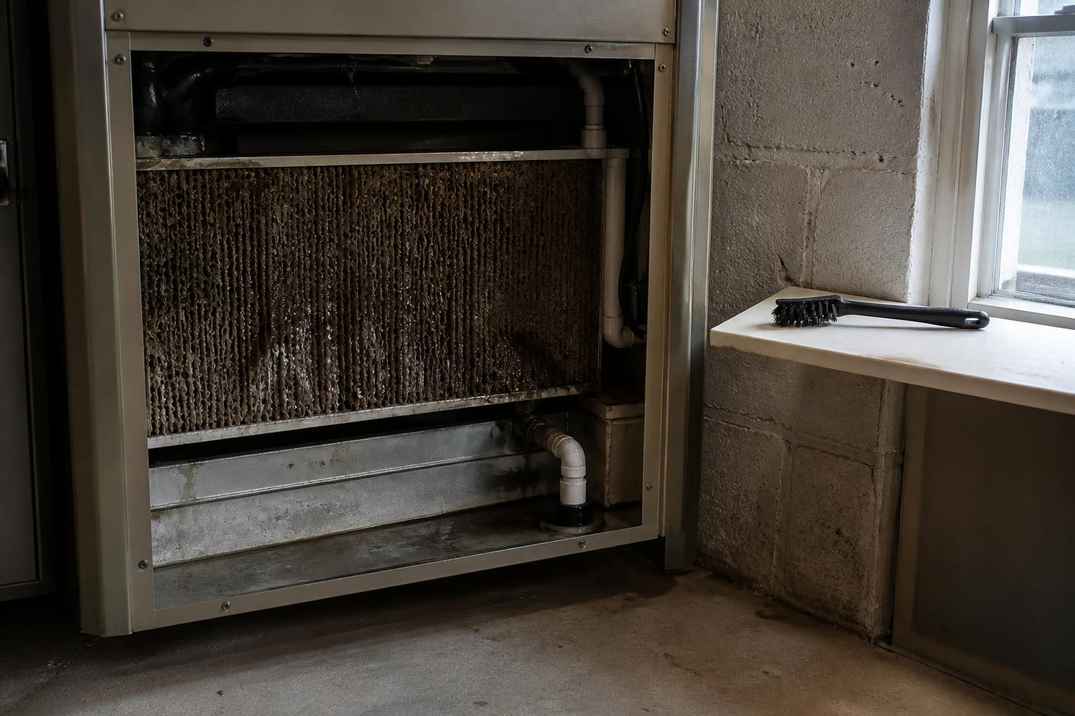
Skipping this maintenance does not just reduce performance; a neglected pad can become a source of mineral dust and, in humid conditions, microbial growth that gets distributed through the ductwork. Pairing humidifier upkeep with your annual HVAC maintenance visit keeps both the furnace and the humidifier on the same seasonal schedule.
What This Means for Your Thermostat and Energy Use
Because properly humidified air feels warmer at the same temperature, some Durham Region homeowners find they can lower the thermostat slightly during winter without a noticeable comfort difference once a whole-home humidifier is dialed in correctly. That is a comfort and efficiency benefit, not a guarantee, since the effect depends on how dry the home was to begin with and how the household normally sets the thermostat.
How a Humidifier Interacts With Your Furnace Filter and Airflow
A whole-home humidifier is plumbed into the supply or return side of your ductwork, so it shares airflow with the rest of the furnace system. A restricted or overdue furnace filter can reduce the airflow available to carry humidified air through the house evenly, which is one reason humidifier performance and regular filter changes tend to go hand in hand. If certain rooms feel noticeably drier than others even with the humidifier running, uneven duct airflow or a closed register elsewhere in the house is often the cause rather than the humidifier itself.
It is also worth checking humidifier settings seasonally rather than leaving them untouched year to year. A setting that worked well during a mild winter can push relative humidity too high once outdoor temperatures drop further, since colder outdoor air changes how much moisture the indoor air can hold before it starts condensing on cold surfaces like window glass.
Frequently Asked Questions
Can a whole-home humidifier cause mould or condensation problems?
It can, if it is oversized for the home or the humidistat is set too high for how well the windows and building envelope handle moisture. Correct sizing and keeping relative humidity around the 30 to 40 percent range recommended for winter are the main safeguards against this.
Does a whole-home humidifier work with any furnace?
Most forced-air furnace systems can accommodate a whole-home humidifier, but the unit needs to be matched to your specific furnace, ductwork layout, and home size. A technician can confirm compatibility during an in-home assessment.
How often does the evaporator pad need to be replaced?
This depends on water hardness, usage, and the specific humidifier model, but most manufacturers recommend checking or replacing the pad at least once per heating season as part of routine maintenance.
Will a humidifier fix cracked wood trim or hardwood gaps?
Stabilizing indoor humidity can reduce seasonal wood movement going forward, but it will not reverse damage that has already occurred. Existing gaps or cracks typically need to be addressed separately.
Do I need to turn the humidifier off in warmer months?
Yes. Whole-home humidifiers are a heating-season accessory. Most systems should be shut off or bypassed once the furnace stops running for the season, and the water supply closed, to avoid unnecessary wear and stagnant water sitting in the unit during the off season.
Ask About Whole-Home Humidifier Installation in Durham Region
If dry winter air is a recurring problem in your Oshawa or Durham Region home, Fortis Heating & Air Conditioning can assess your furnace and ductwork to determine whether a whole-home humidifier is a good fit, and keep it maintained alongside your regular HVAC maintenance visits. Call (289) 688-4822 or request an in-home assessment to get a sizing recommendation specific to your house.

