

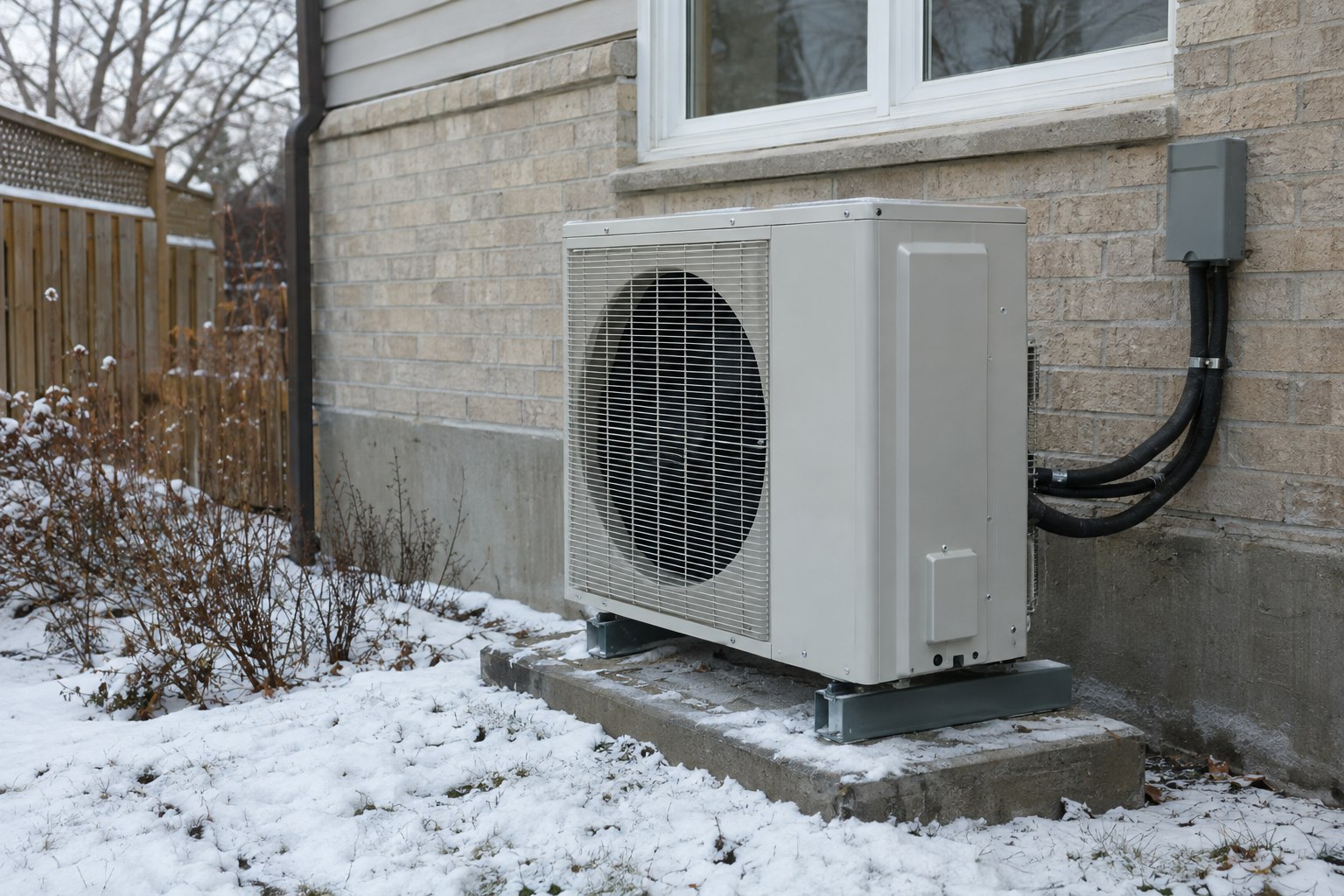
A heat pump can run for long stretches during a cold Ontario day without being broken. It moves heat from outdoor air into the home, and the amount of available heat changes as the outdoor temperature falls. A steady operating cycle may be the system responding to the weather. The useful question is whether the home is reaching its set temperature, whether the airflow feels normal, and whether the outdoor unit is behaving as its instructions describe. Those observations help separate normal winter operation from a problem worth investigating.
If your heat pump seems to run constantly in Oshawa or elsewhere in Durham Region, start with checks you can make without opening equipment or defeating a safety control. This guide explains what to record, what to leave alone, and when to contact a qualified technician. Different systems use different controls and backup-heat arrangements, so the installer manual and the model-specific thermostat instructions still matter.
Why winter cycles can be long
A heat pump does not usually deliver heat in the same bursts as a traditional furnace. At milder temperatures it may operate at a lower output for longer, maintaining a steadier indoor temperature. As outdoor air gets colder, the equipment may need more run time to replace heat lost through windows, doors, walls and air leaks. Wind, an open door, a recent setback on the thermostat, and a room that was allowed to cool overnight can all lengthen a cycle. Long operation by itself is not a diagnosis.
Watch the actual room temperature for an hour or two at a stable thermostat setting. If the displayed temperature is holding near the setpoint and rooms feel reasonably even, a long cycle may be normal for the conditions. If the temperature keeps falling while the system runs, or the system never approaches the setpoint after a reasonable recovery period, note that pattern. The technician needs the pattern and the outdoor conditions more than an estimate that the unit has been running all day.
Check the thermostat and backup-heat setting
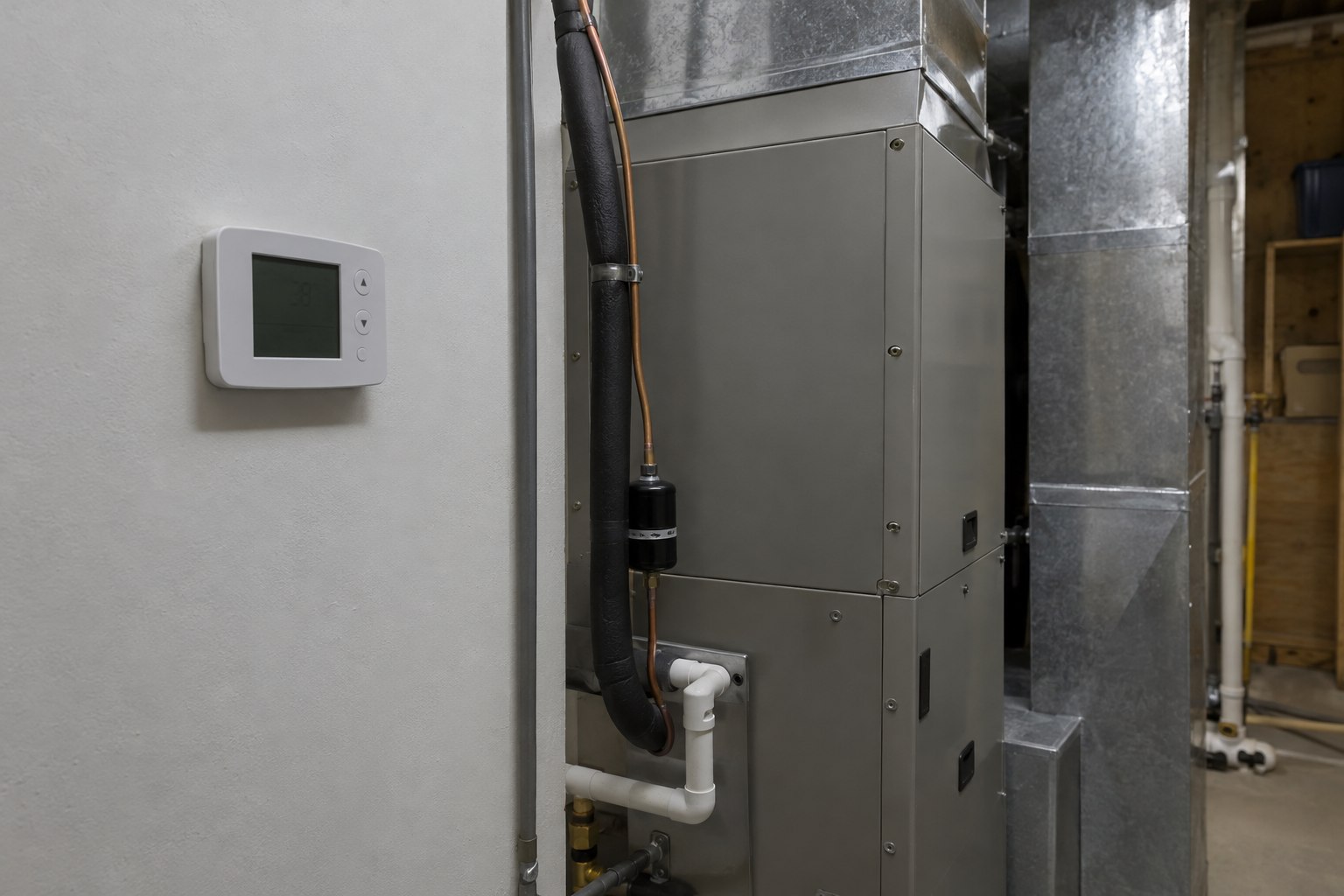
First confirm that the thermostat is calling for heat rather than cooling, that the setpoint is reasonable, and that any schedule has not changed unexpectedly. Some thermostats display an auxiliary-heat or emergency-heat indicator. Those labels have different meanings. Auxiliary heat may operate automatically when needed; emergency heat is often a manual mode intended for specific circumstances. Do not switch to emergency heat simply because the outdoor unit is running a long time. Read the thermostat and system instructions or ask the installer what the indicator means for your equipment.
A large overnight setback can make a system work for a long time to recover, and may call on backup heat depending on the controls. If the house is comfortable after recovery, try a smaller, consistent setting for a few days and compare. If a thermostat shows a fault message, captures an unusual temperature reading, or repeatedly changes modes without input, photograph the display and record the time. Avoid changing installation settings, wiring or sensor calibration as a homeowner test.
Airflow and filter checks that are safe to do
A restricted return path can make heating less effective. Check that supply registers and return grilles are not blocked by furniture, rugs or stored items. If your system has a homeowner-serviceable filter, inspect it according to the equipment instructions and replace it with the correct size and type when dirty. A filter that is too restrictive for the system can also reduce airflow, so do not assume the highest rating available is automatically the right choice. Keep the equipment panels closed after any permitted filter access.
Note whether one room is much colder than the others, whether airflow at several registers is weak, or whether a new noise began at the same time as the long cycles. Those details may point to airflow, duct or control issues. Fortis provides custom ductwork and heating service across its service area, but the correct fix depends on an on-site assessment. Do not tape over registers, open sealed ductwork or use a space heater to mask a possible system fault without following its safety instructions.
What to look for at the outdoor unit
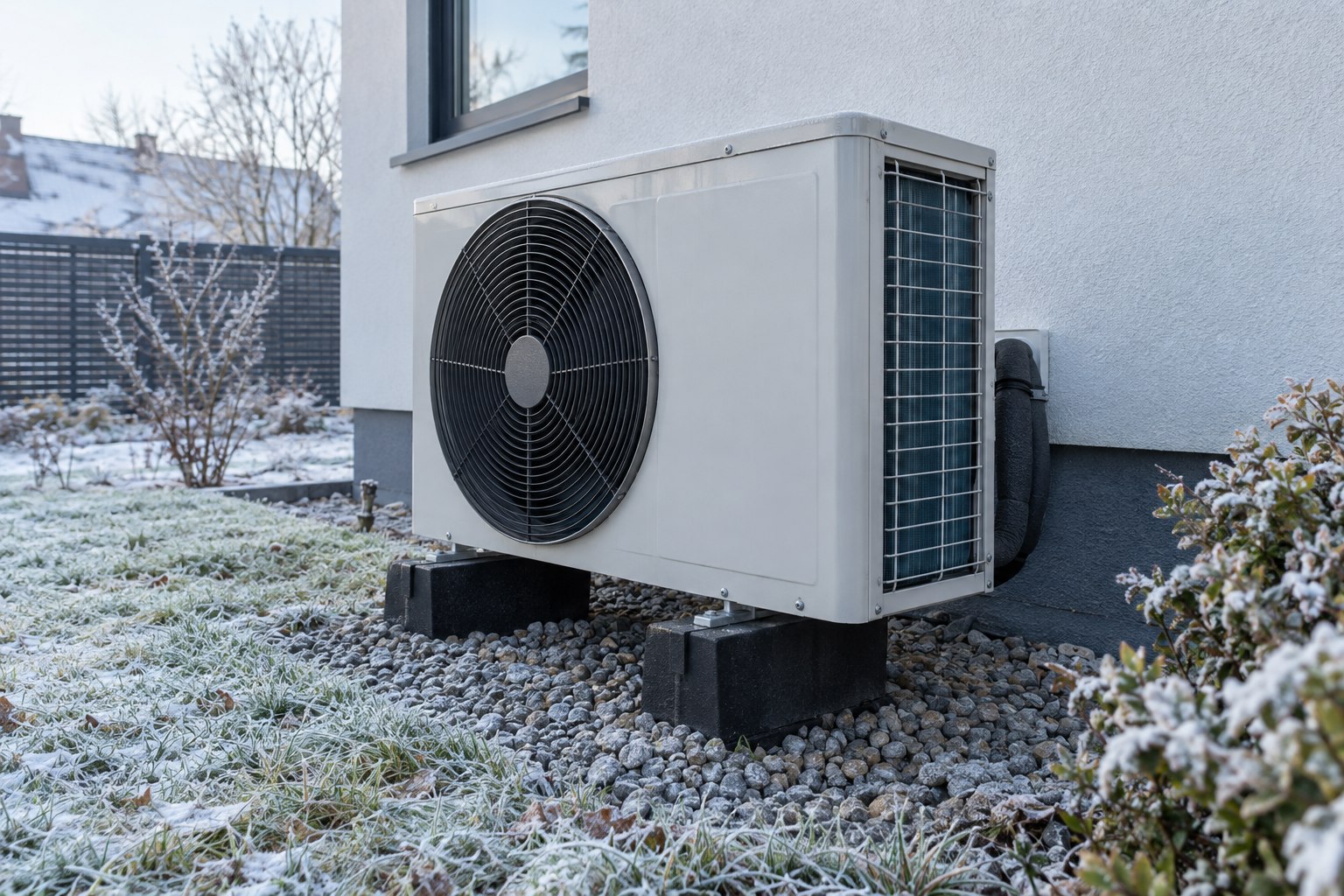
A heat pump may periodically enter a defrost cycle in cold, damp weather. The outdoor fan may pause, the sound may change, and water or light steam may appear briefly as frost clears. Fortis has a separate explanation of the heat pump defrost cycle; use it to compare what you see with typical operation. A thin coating of frost that clears is different from a thick mass of ice that keeps growing or a fan that remains obstructed.
Look from a safe distance. Keep leaves, drifting snow and objects away from the unit as the manufacturer directs, but do not chip ice, pour boiling water over the coil, or remove the guard. Ice around the base may also create a slipping hazard. If the unit is encased in ice, the fan is striking ice, a breaker keeps tripping, or the outdoor unit is not operating while the house loses heat, stop experimenting and arrange a professional check. Record a short video from a safe location if the fault is intermittent.
When running constantly points to a repair
Call for service when the room temperature falls steadily despite a heat call, airflow is suddenly weak, the system shows a persistent fault, or the outdoor unit repeatedly ices without clearing. Short cycling, loud new mechanical sounds, a burning smell, or an electrical fault also deserve prompt attention. If you smell gas or suspect carbon monoxide, leave the area and follow the emergency guidance of your gas utility and local authorities; do not keep troubleshooting the heat pump. A professional can check performance and controls without guessing from run time alone.
Describe what changed, not just the current symptom. Useful notes include the approximate outdoor temperature, thermostat setpoint and room reading, when the long cycle began, whether backup heat appeared, and whether the filter or a blocked grille was involved. If the issue started immediately after service, a power interruption or thermostat change, mention that timing. Photos of a fault display or outdoor ice can save time, but avoid sharing personal information or opening equipment to take them.
A practical decision for Durham Region homes
A long, steady run with a comfortable house and a clear outdoor coil may simply be the way the system handles colder weather. A long run with falling indoor temperature, persistent ice, new noises or repeated fault messages needs investigation. Do not judge efficiency or capacity from a single cold day; the building and equipment should be assessed together. The existing heat-pump service page explains Fortis installation and repair options without promising that every symptom has one cause.
Before booking a visit, compare the readings in more than one room and note whether doors are shut or an unusually cold room is pulling the average down. A portable thermometer can help confirm a thermostat reading, but it does not replace a system test. If comfort varies by room, mention which rooms are affected and whether the issue happens only on windy nights. That information helps distinguish a building or airflow concern from a heat-pump fault without asking you to handle refrigerant, electrical parts or gas backup equipment.
For background on how air-source equipment moves heat and how systems are rated, see the ENERGY STAR air-source heat pump guide. Its general explanation does not replace the operating limits in your model manual or an on-site diagnosis. It is most useful for understanding why a heat pump may run differently from a furnace and why the building, outdoor conditions and equipment choice all affect comfort.
Questions about long winter run times
Does a longer cycle always mean higher energy use?
No. Run time alone does not establish total energy use or system efficiency. A heat pump can operate at a lower output for a longer period. Compare indoor comfort, outdoor conditions and the equipment’s own operating information. If your house cannot hold its set temperature, ask a qualified technician to assess performance instead of trying to infer it from the clock.
Should I shut off the heat pump during defrost?
Do not interrupt an ordinary automatic defrost cycle just because the outdoor fan pauses or the sound changes. Follow the model manual. If ice keeps building, the fan is obstructed, or the house is losing heat, stop homeowner troubleshooting and request service.
If your home is not holding its temperature or you see a persistent fault, contact Fortis Heating & Air Conditioning to request a heat-pump assessment. Tell the team what you observed and what safe checks you completed so the visit can focus on the cause. A technician can review the controls, airflow and outdoor operation and explain the repair or maintenance options for your actual system.