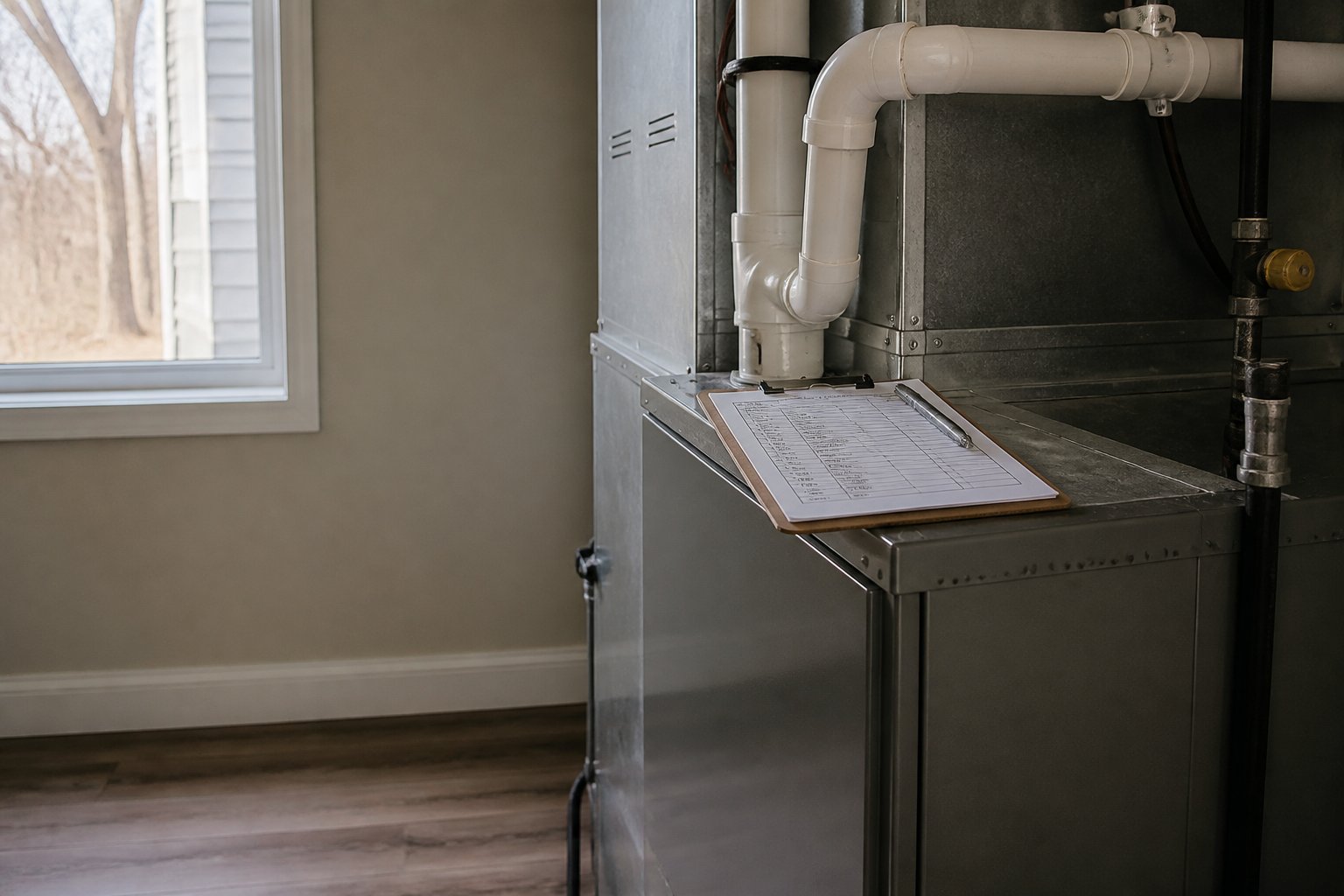



A furnace that smells like something is burning can be harmless for a short time, or it can be an early warning that the system should be shut down and inspected. The difference usually comes down to what the odour resembles, when it started, how long it lasts, and whether the furnace is behaving normally.
Do not ignore a strong, persistent, electrical, chemical, smoky, or gas-like odour. If anyone has symptoms such as headache, dizziness, nausea, weakness, confusion, chest pain, or shortness of breath, leave the home and seek emergency help. This guide can help you describe what happened, but it cannot identify a furnace fault from smell alone.
A Light Dusty Smell at the First Start of the Season
When an unused heating system starts for the first time after summer, dust on accessible warm surfaces and in nearby ductwork can produce a dry, dusty odour. If that is the cause, the smell is generally mild and fades as the system runs. You should not see continuing smoke, hear unusual sounds, or notice the smell growing stronger from one cycle to the next.
Open a window briefly if conditions allow, make sure supply and return registers are unobstructed, and check that the filter is correctly installed. If the odour does not fade, returns strongly on later cycles, or is accompanied by another symptom, turn the furnace off and arrange service. What seems like seasonal dust can sometimes be an overheating component or debris where it should not be.
An Overheated or Dirty Filter Smell
A heavily loaded filter restricts airflow. That can make the blower work harder and allow heat to build where the system is designed to move it away. The resulting odour may seem hot, dusty, or stale. A clogged filter can also reduce comfort and contribute to short cycling.
Turn the furnace off before accessing the filter, follow the equipment instructions, and check the airflow arrow when installing a replacement. Use a filter type suitable for the system; a higher-efficiency filter is not automatically better if it creates too much resistance. Enbridge Gas appliance-safety guidance recommends regular filter checks and annual inspection of fuel-burning appliances by a registered contractor. The right replacement interval depends on filter type, equipment, pets, renovation dust, and household conditions, so follow manufacturer and technician guidance for your home.

Electrical, Melting-Plastic, or Fishy Odours
A sharp electrical smell, melting-plastic odour, or unusual fishy smell can point to overheated wiring, a failing motor, a damaged control, or another electrical component. These are not normal seasonal smells. Switch the system off at the thermostat. If it can be done safely and you know the correct furnace disconnect, turn that off as well, then call an HVAC professional.
Do not remove furnace panels, touch wiring, or repeatedly restart the system to see whether the smell returns. Intermittent electrical faults can disappear long enough to create false reassurance while damaged insulation or a failing component continues to deteriorate. If there is visible smoke, sparking, active fire, or heat at the electrical panel, leave the area and call 911.
Smoke, Soot, or an Oily Burning Smell
Visible smoke or soot is a clear stop signal. Shut the furnace down if it is safe to do so, get everyone away from the affected area, and call for professional help. Do not keep the system operating to preserve heat while investigating.
An oily or smoky odour may come from a foreign object near a warm component, a motor problem, contaminated ductwork, or another mechanical issue. Homes with equipment other than a natural-gas furnace can have different causes. The technician needs to identify the equipment, inspect the heat exchanger area, blower assembly, electrical system, venting, and combustion performance as appropriate.
A Rotten-Egg or Sulphur Smell Is a Gas Emergency
Natural gas is given a distinctive rotten-egg or sulphur-like odour so leaks can be noticed. If you smell it, do not operate switches, appliances, phones, garage-door openers, or anything else that could create a spark inside the building. Leave immediately, moving to a safe distance. From outside, call the gas utility’s emergency number or 911 and follow their instructions. Do not return until the responding authority says it is safe.
Carbon monoxide is different: it has no colour, taste, or smell. A home can have a combustion or venting problem without any burning odour. Keep approved carbon-monoxide alarms installed and maintained as required, and never treat smell as a substitute for alarms and professional inspection. Enbridge Gas provides additional Ontario carbon-monoxide safety information.
Dust, Debris, or a Closed Register Near the Heat
Sometimes the odour is carried by the furnace rather than created inside it. Dust on a floor register, pet hair near a return, a small item dropped into a vent, or renovation debris can smell when heated air begins moving. Turn the system off, let surfaces cool, and clean only the areas you can safely reach without opening the furnace or reaching into ductwork.

Keep furniture, rugs, curtains, boxes, and household chemicals away from registers and the furnace. Do not store gasoline, paint thinner, aerosol products, or other flammable materials in the furnace room. If the smell continues after accessible dust and obstructions are removed, the source needs a professional assessment.
What to Check Without Taking the Furnace Apart
A homeowner can make a few safe observations before calling:
- Note when the odour begins and how long it lasts.
- Describe whether it smells dusty, electrical, smoky, chemical, oily, or like sulphur.
- Check the thermostat for an error message and note any furnace status light without removing panels.
- Look at the filter and accessible registers after turning the system off.
- Listen for scraping, buzzing, repeated ignition attempts, or unusually long operation.
- Check whether carbon-monoxide or smoke alarms are sounding.
Do not bypass a safety switch, reset the system repeatedly, light anything manually, or attempt a gas or electrical repair. Share your observations with the technician; they can make the service visit more focused without adding risk.
When to Schedule Furnace Service
Arrange prompt service when a burning smell persists beyond the first seasonal startup, appears during every cycle, becomes stronger, or comes with poor airflow, unusual noise, breaker trips, error codes, short cycling, or rooms that no longer heat normally. Shut the system down sooner for electrical, plastic, chemical, smoky, or gas-like odours.
Annual HVAC maintenance is an opportunity for a trained technician to inspect operation, venting, safety controls, electrical connections, the filter, and combustion performance where applicable. Maintenance cannot guarantee that a part will never fail, but it can identify visible wear and unsafe operation before a minor warning becomes a loss of heat or a safety problem.
Frequently Asked Questions
How long should a first-start dust smell last?
A mild dusty smell should fade rather than remain strong. There is no safe universal time limit because systems and conditions differ. If it persists, intensifies, returns on later cycles, or comes with smoke or unusual operation, turn the furnace off and have it checked.
Can I run the furnace without a filter to test it?
No. Operating without the correct filter can draw dust and debris into the blower and equipment. Replace a dirty filter with the correct size and type, following the furnace and filter instructions.
Does a burning smell mean the heat exchanger is cracked?
Not necessarily, and smell cannot confirm or rule out a heat-exchanger problem. A trained technician must inspect and test the equipment. Carbon monoxide is odourless, which is why functioning alarms and professional combustion-safety checks matter.
Should I call the gas utility or an HVAC company?
For a rotten-egg or sulphur smell, leave and call the gas utility emergency line or 911 from outside. For a non-gas burning odour without an active fire, turn the furnace off and call a qualified HVAC contractor. Call 911 for smoke, fire, or immediate danger.
Get the Odour Checked in Oshawa and Durham Region
If your furnace burning smell in Oshawa is persistent or difficult to identify, stop guessing and have the system assessed. Fortis Heating & Air Conditioning provides furnace repair and home-heating service across Oshawa and Durham Region. For non-emergency HVAC service, call (289) 688-4822 or request an appointment. For a suspected gas leak, fire, or medical emergency, leave the area and contact the appropriate emergency service first.