


When your water heater stops working, the first question most homeowners in Durham Region ask is simple: who do I call? The answer depends on whether you’re dealing with a plumbing problem or a heating problem — and getting it wrong means paying for a service call that doesn’t fix anything. Your water heater sits at the intersection of two trades, and the symptoms often overlap. Here’s how to diagnose the real issue before picking up the phone.
Signs It’s an HVAC / Heating Issue
The heating side of your water heater includes everything that generates and controls heat — the burner assembly, gas valve, thermocouple, ignition system, and venting. When these components fail, the tank may still hold water perfectly fine, but it simply won’t heat it.
The most common heating-side symptom is a pilot light that keeps going out or won’t stay lit. This usually points to a faulty thermocouple or a gas valve that isn’t maintaining proper fuel flow. Both are components that an HVAC technician — not a plumber — diagnoses and replaces.
If your burner ignites but water heats slowly or never reaches full temperature, the problem may be a failing heat exchanger or a gas pressure issue. Electronic ignition errors or flashing error codes on the unit’s control board are also HVAC diagnostic territory. These control systems require specialized testing equipment that heating technicians carry.
If your water heater is electric rather than gas, the heating side looks different but still belongs to a specialist. Burned-out upper or lower heating elements, failed thermostats, or a tripped high-limit reset — the small red button on the panel — are the usual culprits, and testing them safely means shutting off the circuit first. On gas units, never brush off exhaust or venting concerns: a backdrafting flue can spill combustion gases, including carbon monoxide, back into the home, which is exactly why a working CO alarm belongs near any fuel-burning appliance.
Strange smells near the burner assembly — not the rotten egg smell of sulphur bacteria — can indicate incomplete combustion or venting problems. This is a safety concern that an HVAC professional should assess immediately, as it may involve carbon monoxide risk.
Signs It’s a Plumbing Issue
The plumbing side of your water heater involves the tank itself, supply lines, valves, anode rod, and all water connections. When these fail, the heating system may work perfectly while water quality or delivery suffers.
Low hot water pressure when cold water pressure is fine usually means sediment buildup in supply lines or a partially closed valve. Rusty or discoloured hot water points to a corroded anode rod or accumulated sediment inside the tank — both plumbing-side repairs that require draining and flushing the unit.
Water pooling around the base of the tank is almost always a plumbing issue. It could be a failed temperature and pressure (T&P) relief valve, a corroded fitting, or a cracked tank. If the issue is water supply lines, sediment in pipes, or water pressure, that’s a job for a licensed plumber rather than a heating technician.
Two parts inside the tank explain many plumbing-side complaints. The anode rod slowly corrodes to protect the steel tank, and once it is spent you often see the rusty water described above. The dip tube carries incoming cold water to the bottom of the tank; if it cracks or breaks, cold water mixes straight into the hot outlet and your showers turn lukewarm even though the burner is working fine. Both are water-side repairs a plumber handles by draining the tank.
If your hot water runs out faster than usual with no change to the thermostat setting, sediment may be displacing water volume inside the tank. This reduces the amount of usable hot water and forces the burner to work harder — which can eventually cause heating-side failures too.
Gas Water Heaters vs. Electric — Who to Call
The fuel your water heater uses often decides which trade should lead. A gas unit makes heat by burning fuel, so anything involving the burner, pilot or igniter, gas valve, thermocouple, or venting is heating and gas-fitting work — and in Ontario the gas connection legally requires a licensed gas fitter. That is squarely HVAC territory.
An electric unit has no burner or vent; it heats water with elements controlled by thermostats and a safety cut-out. When an electric heater stops producing hot water, the fault is usually an element or a thermostat, and the water connections around it remain ordinary plumbing. Knowing whether you own a gas or electric model — a quick look for a flue pipe and a pilot access panel usually tells you — helps you describe the problem accurately and get the right technician to your door the first time.
When Both Trades Need to Work Together
Some water heater situations genuinely require both a plumber and a heating technician. Combo boiler systems where the furnace heats domestic hot water are a common example — the furnace technician handles the heating loop while the plumber manages the potable water side.
A full water heater replacement often requires both trades as well. Gas line work falls under the HVAC scope, while new water supply connections and drain valve installation are plumbing work. In Ontario, gas line work specifically requires a licensed gas fitter (G2 or G3 certificate), which most HVAC companies employ.
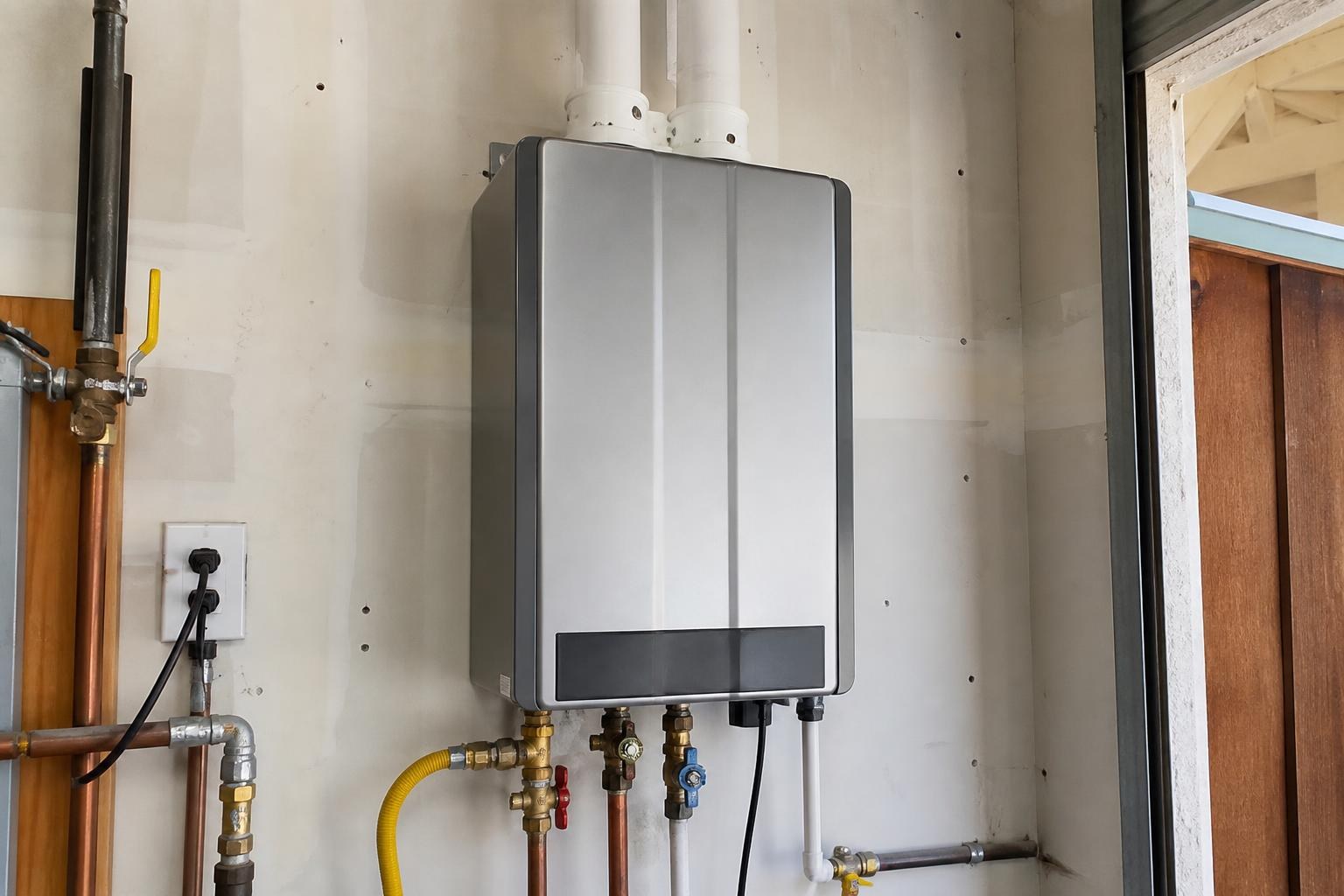
Tankless water heater installations are another scenario where both trades coordinate. The HVAC side handles gas line sizing, venting, and combustion air requirements, while the plumber reconfigures water lines and installs isolation valves. Even venting issues can cross both trades when exhaust gas routing and condensate drainage both need attention.
How to Diagnose Before Calling Anyone
Before making any service call, run through this quick checklist. It takes five minutes and can save you the cost of having the wrong trade show up.
- Check the pilot light or ignition indicator. If it’s out or flashing an error code, start with an HVAC call. The heating system isn’t firing, and no amount of plumbing work will fix that.
- Run the cold water tap. If cold water pressure is also low, the issue is in your supply plumbing upstream of the water heater — not the heater itself.
- Look for visible leaks around fittings, valves, or the tank base. Water on the floor means call a plumber first. Even if the heating system also needs work, the leak takes priority.
- Check your thermostat setting. If it’s set correctly (typically 49°C / 120°F for Ontario homes) but water is only lukewarm, the heating element or gas valve may be failing.
If you’re still unsure after this checklist, start with whichever trade can get to your home first. An experienced HVAC technician or plumber can typically identify whether the issue belongs to the other trade within the first few minutes of inspection.
This overlap between HVAC and plumbing isn’t unique to water heaters — basement water after a storm often gets blamed on plumbing when it’s actually a clogged HVAC condensate line, so the same location-clarity-timing checklist applies there too.
Durham Region Service Options
Fortis Heating & Air Conditioning handles all heating-side water heater issues across Oshawa, Whitby, Ajax, Clarington, and Cobourg. That includes thermocouple replacement, gas valve repair, burner service, electronic ignition diagnostics, and full unit installation when it’s time for a new water heater.
For supply-side plumbing problems — sediment flushes, anode rod replacement, T&P valve issues, or pipe connections — a licensed plumber is the right call. Many Durham Region homeowners find that getting the diagnosis right the first time avoids paying for two separate service calls.
Get the Right Trade to Your Door the First Time
Use the diagnostic checklist above to narrow things down before picking up the phone. If your water heater symptoms point to a heating problem, call Fortis at (289) 688-4822 or book online for same-day diagnosis and repair across Durham Region. And if it turns out to be a supply-side plumbing fault, we’ll tell you honestly, so you’re never paying for two service calls to solve one problem.
Frequently Asked Questions
Can a plumber fix my water heater’s pilot light?
Technically, some plumbers are also licensed gas fitters and can work on the burner assembly. However, pilot light issues, thermocouple failures, and gas valve problems are heating-side components. An HVAC technician who specializes in combustion systems will diagnose these faster and more accurately.
How do I know if my water heater needs to be replaced entirely?
Most tank water heaters in Ontario last 8 to 12 years. If yours is over 10 years old and you’re facing repeated repairs — whether plumbing or heating side — replacement is usually more cost-effective. Signs include visible rust on the tank, frequent pilot outages, and water that never fully heats.
Does a tankless water heater eliminate these crossover issues?
Tankless units reduce some problems (no tank to corrode or accumulate sediment) but introduce others. They still have both heating components (burner, heat exchanger, electronic controls) and plumbing components (water inlet filter, isolation valves, condensate drain). The two-trade dynamic still applies.
Is a leaking water heater an emergency?
It depends on where the water is coming from. A small drip from the temperature and pressure relief valve or a fitting can often wait for a same-day appointment, but water pooling from the base of the tank usually means the tank itself has failed and should be addressed right away to prevent flooding. In either case, shut off the water supply to the heater and, on a gas unit, turn the control to the pilot or off setting until help arrives.
How can I tell if I have a gas or electric water heater?
Look at the bottom of the tank: a gas unit has a burner access panel, a flue pipe running out of the top, and a gas line with a pilot or igniter, while an electric unit has an electrical cable entering the side and no vent. Knowing which you have tells you whether a no-heat fault is likely gas-side or element-side, and which trade to call first.