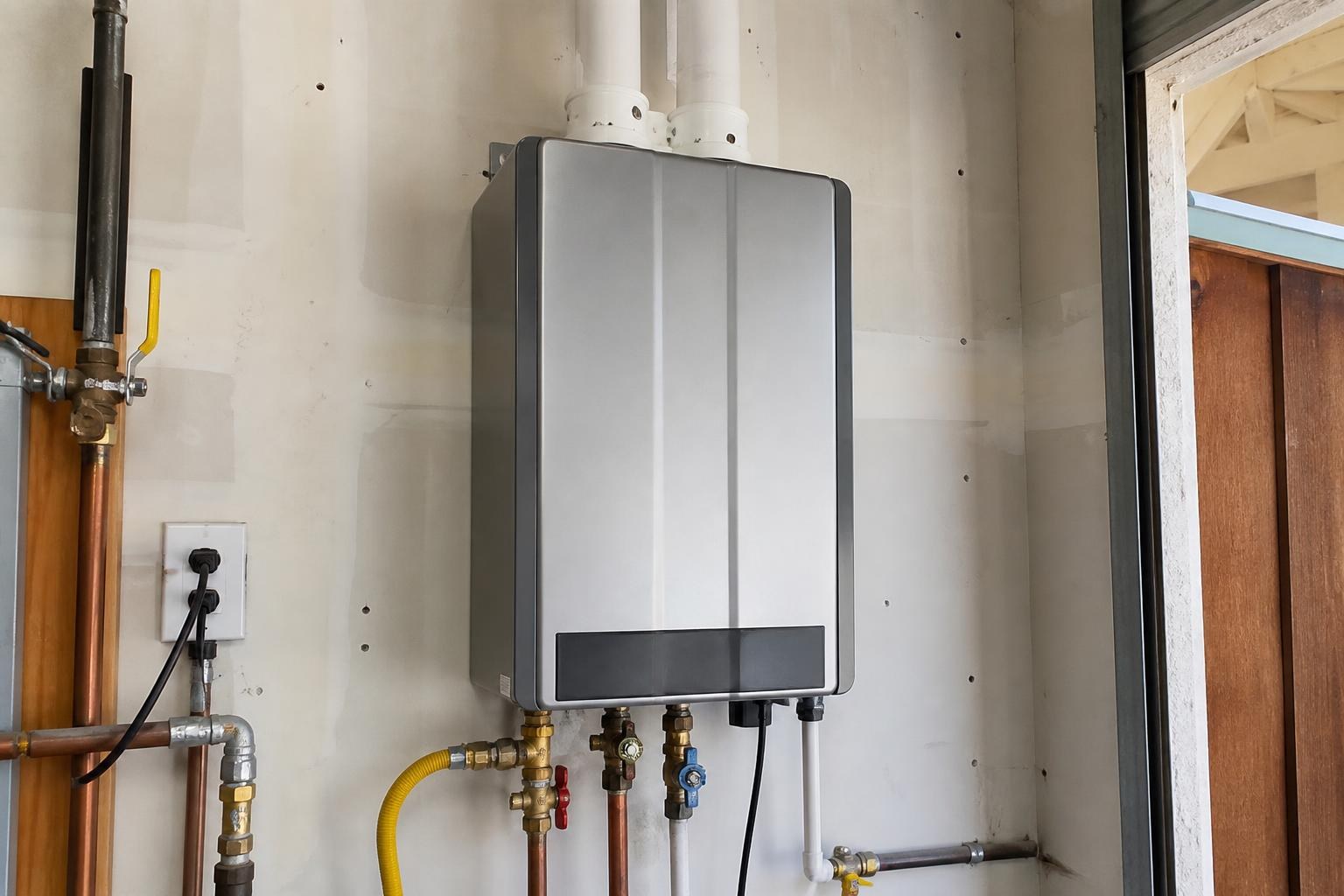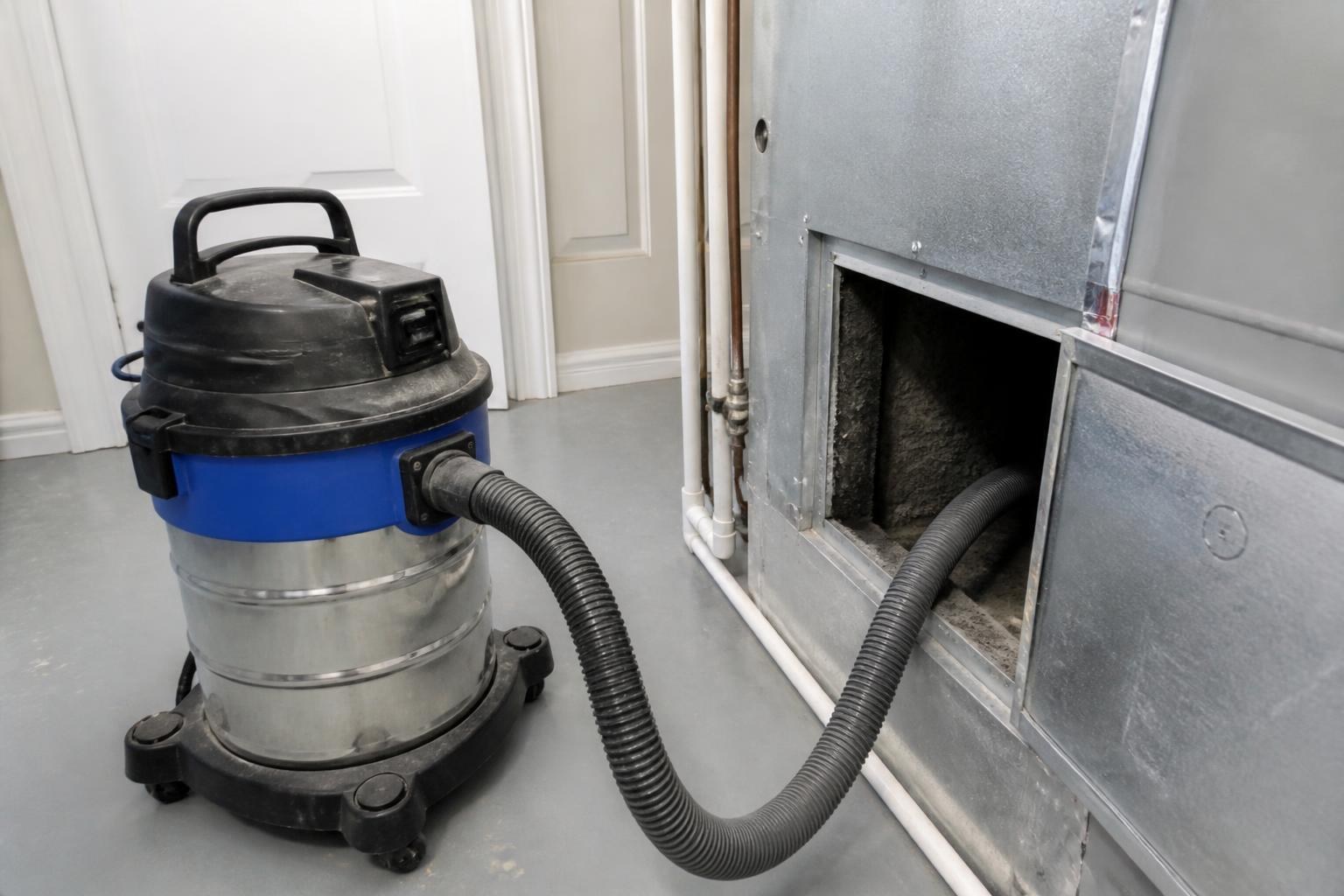


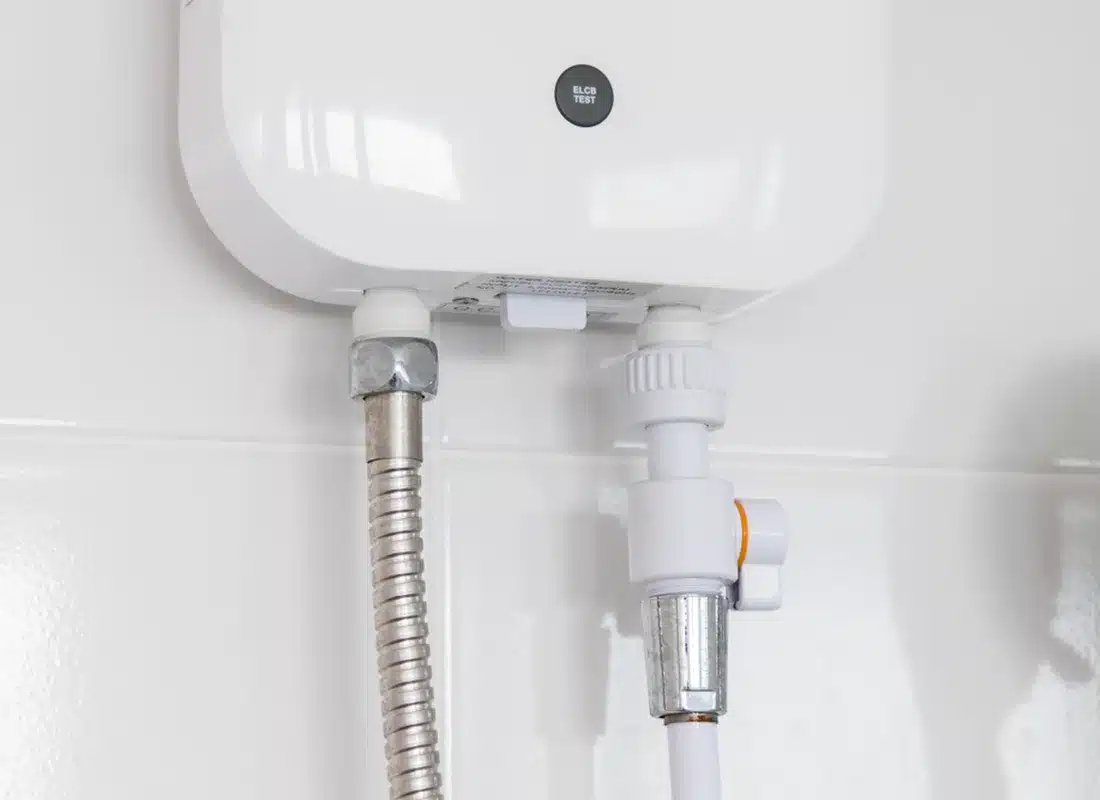
Tankless water heater maintenance is worth handling before summer guests arrive, especially in busy Durham Region homes where showers, laundry, dishes, and visitors can stack up quickly. A maintenance check can catch scale buildup, intake restrictions, error history, or venting concerns before demand increases. Unlike a storage tank that keeps a reservoir of hot water, a tankless unit heats on demand, so a small restriction that goes unnoticed at low use becomes obvious the moment two showers and a dishwasher run at once.
The good news is that most tankless problems are preventable and follow a predictable pattern. Mineral scale, a clogged inlet screen, and a unit that has been quietly logging error codes are behind the majority of mid-summer service calls. Handling those before the house fills up means steady temperatures instead of the frustrating swings that send someone out of the shower to fiddle with the thermostat. The sections below explain what actually matters, what you can check, and what should be left to a technician.
Tankless Water Heater Maintenance: What Matters First
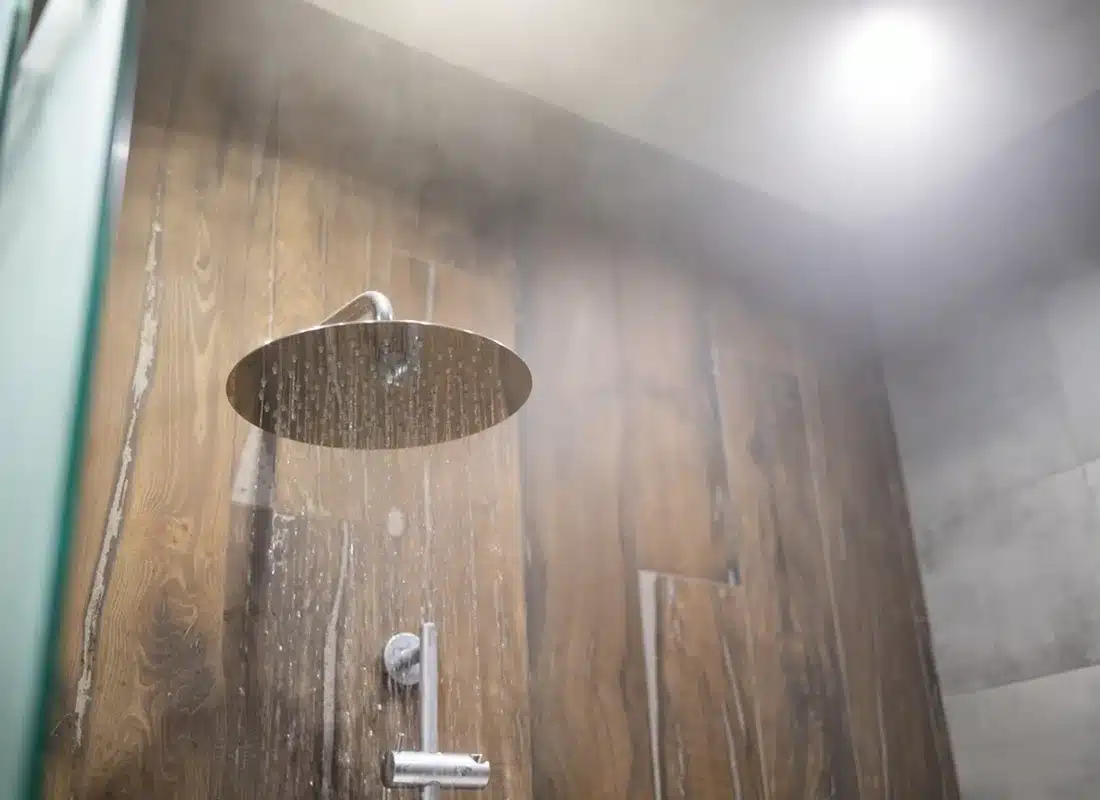
The first step is matching maintenance to the home’s actual water conditions. Durham’s municipal water is moderately hard, and that hardness is the single biggest factor in tankless wear. As water heats, dissolved calcium and magnesium drop out of solution and coat the heat exchanger as scale. A scaled exchanger transfers heat less efficiently, restricts flow, and eventually triggers overheat or flow-related error codes. That is why descaling, not the burner itself, is usually the heart of a tankless tune-up.
The second factor is how the unit is used. A tankless heater has a minimum activation flow rate, meaning it needs a certain volume of water moving through it to fire the burner. If several fixtures share the supply during a busy morning, you can also run into a “cold-water sandwich” effect, where a short slug of cooler water arrives between two bursts of hot. Understanding the home’s real demand tells us whether a unit is simply due for service or genuinely undersized for a full house.
Key Checks Before You Commit
Before a busy stretch, slow down and review the details that decide whether the unit keeps up. These checks are simple, but they prevent most of the mid-summer complaints we hear about.
- Flush Interval: Review the manufacturer’s descaling interval against local water hardness. In moderately hard water, an annual flush is a sensible baseline, and heavy-use homes may need it sooner.
- Intake Screen: Clean or inspect the cold-water inlet filter screen so debris and sediment do not restrict flow, and confirm combustion air openings are clear.
- Error History: Read the stored error codes on the display before guests increase demand. Recurring ignition, flame-loss, or overheat codes point to problems worth fixing early.
- Vent Clearance: Confirm the exhaust and intake terminations outside are clear of nests, debris, and obstructions before the unit is used heavily.
What a Descaling and Flush Actually Involves
A proper flush is more than running vinegar through the unit. On models with isolation (service) valves, a technician closes the valves, connects a submersible pump and a bucket of descaling solution, and circulates it through the heat exchanger for roughly 45 minutes to an hour to dissolve accumulated scale. The unit is then rinsed with fresh water, the inlet filter screen is removed and cleaned, and the burner and flame sensor are checked. If your unit was installed without isolation valves, adding them is a worthwhile upgrade because it turns future flushes into a routine, low-cost service instead of a plumbing project. Skipping this step is the most common reason a tankless heater loses output years before it should.
It also helps to compare the project against a reliable outside source. For broad seasonal planning, review ENERGY STAR heating and cooling guidance. For efficiency and safety decisions, Natural Resources Canada energy efficiency guidance can add useful context before you talk with a local provider.
Reading the Warning Signs Before They Escalate
A tankless unit usually tells you it needs attention well before it quits. Watch for hot water that fluctuates during a single shower, a longer wait for hot water to arrive, a noticeable drop in flow at the tap, or a burner that short-cycles on and off. Error codes on the display are the clearest signal of all; an ignition-failure code can mean gas supply or venting trouble, while an overheat or flow code very often means scale. Rumbling or knocking from the unit can also indicate mineral buildup on the exchanger surface.
Some of these you can act on yourself. Cleaning the inlet screen, clearing the outdoor vent terminations of leaves or nests, and confirming the gas is on and the unit has power are all reasonable homeowner steps. Anything involving the gas valve, combustion, venting, or persistent error codes should be left to a licensed technician. If the unit is aging, undersized, or scaling faster than flushing can keep up, it may be time to weigh repair against replacement and explore a right-sized tankless option for the household.
Local Conditions Change the Best Choice
Local conditions matter because Durham Region homes see cool spring water give way to heavy summer demand, and the region’s moderately hard water steadily builds scale year-round. Water hardness, the unit’s age, its maintenance history, and how many people are drawing hot water at peak times all change the best recommendation, so a generic maintenance schedule rarely fits a specific home.
That is why a local recommendation is usually more useful than a generic buying guide. Fortis Heating & Air Conditioning can review the unit, the water conditions, and the maintenance history before pointing you toward a practical next step.
How to Plan the Next Step

If you are early in the process, start with the service page that matches your need: compare hot water options. That gives you a baseline before you decide whether maintenance, repair, or replacement planning makes sense.
Next, think about the hot-water pattern in the home. Repeated temperature swings, error codes, slow recovery, weak flow, or an overdue flush are all reasons to schedule a service review before a busy stretch of summer use. Tell us how many fixtures tend to run at once, and our team can confirm whether a tune-up will carry you through the season.
Frequently Asked Questions
How soon should I make this decision?
Plan before the busiest part of the season. Waiting until the first major heat wave, storm pattern, or holiday weekend often limits product availability and appointment times.
Is the lowest-cost option usually good enough?
Sometimes, but not always. The lowest-cost option can be fine for light use, but higher-exposure spaces and systems usually need better materials, installation, or maintenance support.
What is the biggest mistake people make?
The most common mistake is choosing based on price alone. Looks matter, but the final choice should also account for comfort, safety, airflow, utility use, warranty, and day-to-day reliability.
Can I handle this myself?
Basic care and comparison shopping are reasonable DIY steps. For installation, safety, warranty-sensitive work, or custom fitting, a professional recommendation usually prevents expensive rework.
How often should a tankless water heater be flushed?
In Durham’s moderately hard water, once a year is a reasonable baseline for descaling, with heavier-use homes benefiting from more frequent service. If you notice reduced flow, temperature swings, or scale-related error codes sooner, move the flush up rather than waiting for the calendar.
Why does my hot water go warm then hot again?
That is usually the cold-water sandwich effect, where a short burst of cooler water passes through between two draws before the burner catches up. Scale on the heat exchanger and a marginal activation flow rate can make it worse, so a descaling and a check of your fixtures often smooths it out.
Can a tankless unit keep up with a full house of guests?
A correctly sized, well-maintained unit can supply several fixtures, but capacity has limits and scale erodes it over time. If demand routinely outpaces the unit even after a flush, it may be undersized for peak use. We can measure your real simultaneous demand and recommend service or a larger model accordingly.
Schedule Tankless Service Before Your Summer Guests Arrive
A short maintenance visit now is far easier than a cold shower halfway through a houseful of summer guests. If your tankless unit is overdue for a flush, throwing error codes, or slow to deliver hot water, call Fortis Heating & Air Conditioning at (289) 688-4822. Our team can descale the heat exchanger, clean the inlet screen, and check the venting so the unit keeps up when everyone wants to shower at once. Start on the contact page and we will find a time that works before the busy season.