

Most of us look forward to curling up near the warm glow of a gas fireplace during the winter months. Whether you’re in Oshawa or Cobourg, that extra layer of comfort makes a big difference when the temperature drops. Gas fireplaces are known for being easy to use, but now and then they can run into problems. One common issue is delayed ignition. When your fireplace doesn’t light right away, or does so with a sharp noise, it can be unsettling and possibly unsafe. That’s when you may want to start considering gas fireplace repair services in Oshawa before the problem grows worse.
What Happens During Delayed Ignition

Delayed ignition means your gas fireplace isn’t lighting as soon as it should. When you turn it on, there may be a pause between when the gas releases and when it ignites. That delay might only last a few seconds, but during that time gas is building up inside the firebox. When it finally catches, the result can be a loud “whoosh” or even a small bang.
This kind of sound can be surprising, especially if you’re sitting close by. You may even see a puff of flame when it finally lights. That kind of reaction can catch even long-time fireplace owners off guard. It may not happen every time, which is part of the reason some people ignore it. But any delay in lighting is a sign something isn’t working the way it should.
What Causes Delayed Ignition
Most of the time, delayed ignition is caused by something blocking or slowing the flow of gas or air. A few common causes include:
• Dust or soot in the burner or pilot opening
• Weak or failing ignition components
• Blocked air passages interrupting the fuel mix
• Thermocouples or sensors that no longer respond properly
These parts wear down over time, especially if the fireplace is used regularly through the winter. Cobourg and Oshawa see long heating seasons, which means fireplaces here may need attention sooner than you’d think. If the ignition system isn’t clean or strong enough, gas won’t catch right away. That tiny delay changes how the flame behaves, and it’s usually the first sign there’s a larger issue building up.
It helps to know how these parts work. On a standing-pilot fireplace, a small continuous flame heats a thermocouple and thermopile — sensors that generate a tiny electrical current to prove the flame is present and hold the gas valve open. If the pilot is dirty or slightly out of position, it may not heat those sensors evenly, so the burner is slow to receive gas at the right moment. Units with electronic ignition light on demand with a spark instead, and a worn igniter or fouled sensor can cause the same lag. Clogged burner ports or a partly blocked venturi can also throw off the precise mix of gas and air, and even a small drop in gas pressure can leave the flame struggling to establish itself cleanly.
Signs You Shouldn’t Ignore

Most gas fireplaces are quiet, so when things start sounding off, it’s time to pay attention. Here are a few signs that delayed ignition might be present:
• A faint puff sound or loud bang when the flame catches
• A smell of gas before the fireplace lights
• Flames that look weaker than usual or show up late
• A pilot light that won’t stay on or flickers often
Some homeowners may notice these signs more during very cold weeks when the unit is being used most often. It’s easy to assume these hiccups are just quirks. But over time, delayed ignition can put stress on your fireplace parts, and in some cases, be risky if gas builds up too long.
The Safety Risk Behind a Delayed Light-Up
That “whoosh” is worth taking seriously because of what actually causes it. When ignition is delayed, unburned gas keeps flowing into the firebox and pools there for a few seconds. The moment it finally reaches the flame, all of that accumulated gas ignites at once in a small, sudden burst rather than the smooth, quiet light-up you should hear. Each of those little pressure pulses is hard on the appliance.
Repeated over a season, these bursts can stress the glass front, loosen components, and wear on the burner and firebox. A delayed light-up is also a hint that combustion isn’t happening cleanly, and incomplete combustion is exactly what can produce carbon monoxide — a colourless, odourless gas. Well-designed direct-vent fireplaces keep combustion sealed away from your room air, but a venting problem, a bad seal, or a cracked component can compromise that barrier. That’s why a working carbon monoxide detector belongs in any home with a gas appliance, and why a delay that keeps happening should be looked at rather than lived with.
Why It’s Best to Call a Technician
Gas appliances should always be handled by licensed professionals. Trying to clean or adjust the system on your own can quickly lead to bigger problems. We’ve seen cases where small delays were ignored until parts burned out or gas valves needed replacing.
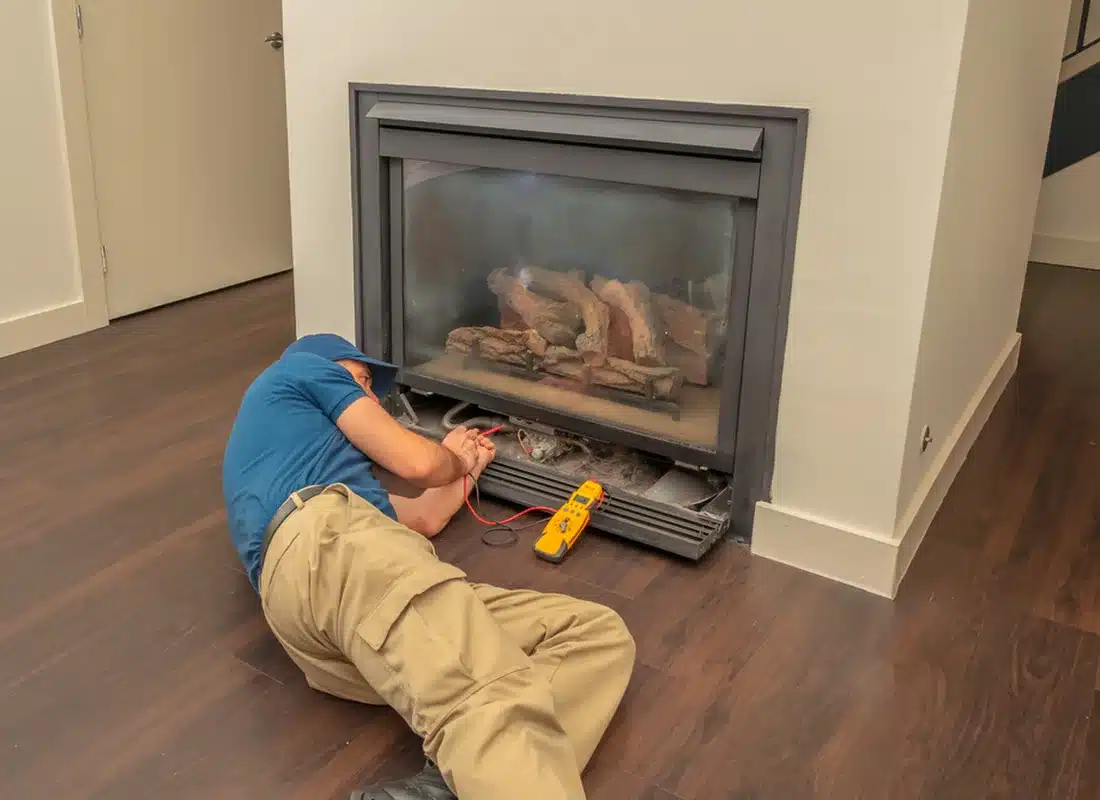
Trained technicians carry the right tools to take a look quickly and safely. They’ll inspect the burner, check gas flow, and measure how long ignition takes. If a part is worn out, they can replace it on the spot. Once everything is tuned properly, ignition should go back to being smooth and quiet again.
Another reason we recommend booking a visit as soon as you notice issues is to keep it from happening again. Regular service cuts down the chance of delayed ignition returning, especially during the winter season when things run every day.
What to Expect During a Fireplace Repair Visit
A typical service visit starts with a safety check. We look for gas leaks, worn seals, and anything that needs attention before touching the controls. Once the area is safe, we open the front panel or access door and take a closer look at the ignition system.
• The technician will clean the burner ports and check for buildup
• The pilot light and thermocouple are tested to make sure they’re in good shape
• If parts aren’t working well, they might be replaced during the same visit
Because this is gas work, in Ontario it must be carried out by a TSSA-licensed gas fitter, who will also confirm the gas pressure, measure the millivolt output of the thermocouple and thermopile, and verify that the venting is clear and drawing properly. Most repairs don’t take more than an hour or two once the problem is found. Booking your repair early in the season is a good idea, especially before Family Day or other holidays when you might want the fireplace working for guests. Since Oshawa and Cobourg winter temperatures linger well into March, it’s smart to keep things running with no interruptions.
Don’t Let Cold Nights Disrupt Your Comfort
Delayed ignition might seem small at first, but it’s usually a sign something inside the fireplace is out of balance. A slow or loud light-up can throw off your comfort and your peace of mind. While not every sound points to danger, changes in normal behaviour shouldn’t be brushed off.
If your fireplace doesn’t feel right or starts making you nervous when it lights, trust your instincts. Having it checked keeps you warm, safe, and ready to enjoy your space for the rest of winter. It’s worth staying ahead of the weather, especially when February nights are still long and cold in Durham Region.
Enjoy a Safe, Quiet Fireside Glow Again
A fireplace that lights with a bang or a puff of gas is telling you it needs attention, and the fix is usually quick when it’s caught early. Our TSSA-licensed technicians will clean the burner, test the ignition and safety controls, and tune everything so your fireplace lights smoothly and quietly the way it should. Call Fortis Heating & Air Conditioning at (289) 688-4822 or book online to arrange expert gas fireplace repair services in Oshawa and get back to cozy, worry-free evenings.
Serving Durham Region: Fortis keeps gas fireplaces lighting cleanly and safely for homes from Oshawa, Whitby, Ajax and Pickering east through Bowmanville, Newcastle, Cobourg and Port Hope.
Fireplace Safety & Efficiency Resources
A few trusted references on gas appliance safety and home energy efficiency:
Frequently Asked Questions
How often should I service my HVAC system in Oshawa?
Plan on professional service twice a year — a spring visit for the cooling side and a fall visit for the furnace. Staying on that schedule can add 5 to 10 years of service life and trim energy bills by 10 to 25 percent. Given how hard Durham Region winters and summers work your equipment, those seasonal tune-ups matter more here than in milder climates.
What temperature should I set my thermostat to save energy?
In Ontario, a setting of 20-21°C (68-70°F) while you’re home strikes a good balance, and dropping it 2-3 degrees overnight or when you’re out saves energy without much notice. A programmable or smart thermostat can handle those changes for you and cut heating and cooling costs by roughly 10-15 percent a year.
How long does an HVAC system typically last?
With good care, a furnace usually runs 15-20 years, an air conditioner 10-15 years, and a heat pump about 12-15 years. Reaching the top of those ranges comes down to regular professional maintenance and changing filters on time.
Is delayed ignition on a gas fireplace dangerous?
It can be, which is why it shouldn’t be ignored. Each delayed light-up burns a small pocket of accumulated gas all at once, and repeated over time this can stress the glass and internal parts and signals that combustion isn’t happening cleanly. Have a licensed technician diagnose the cause promptly, and make sure a working carbon monoxide detector is installed nearby.
Can I fix delayed ignition myself?
We don’t recommend it. Because delayed ignition involves the flow of gas and the ignition system, adjustments and cleaning should be done by a TSSA-licensed gas fitter who can test gas pressure and the safety controls safely. A professional can usually resolve the problem in a single visit and confirm the fireplace is operating correctly before leaving.