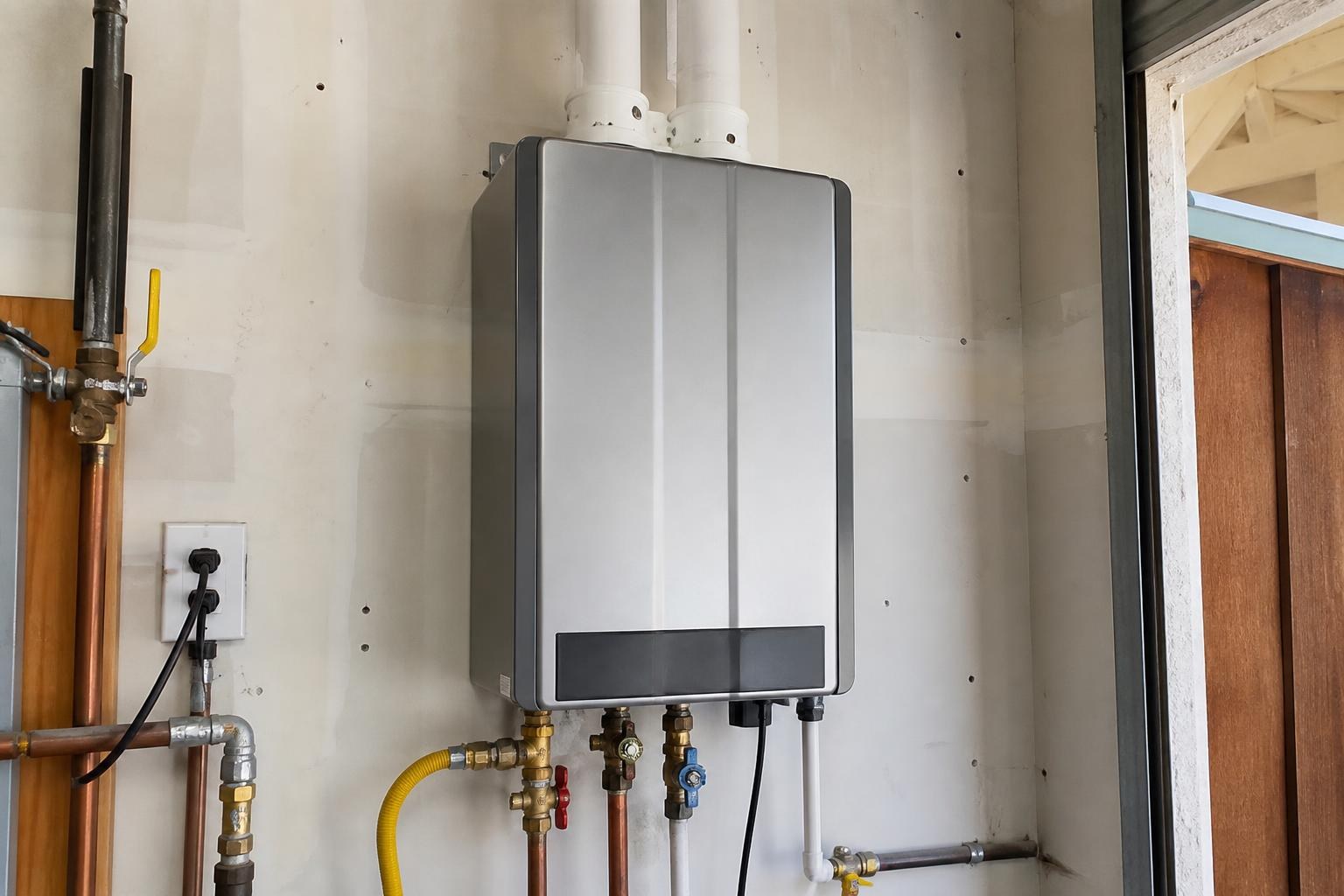



If you’re weighing a heat pump vs furnace for your Oshawa home, you’re not alone. Homeowners across Durham Region face this decision every year, especially as energy costs rise and high-efficiency systems become more common. Both systems heat your home effectively, but they work differently, cost differently, and suit different homes. This guide breaks down what you need to know so you can make the right call.
How a Furnace Works — and Why It’s Still a Top Choice

A gas furnace burns natural gas to generate heat, then distributes it through your home’s ductwork. Modern high-efficiency furnaces from brands like Amana and Goodman achieve AFUE ratings of 96% or higher, meaning nearly all the fuel you pay for becomes usable heat.
In Oshawa and the broader Durham Region, winter temperatures regularly drop to -15°C or colder. A furnace doesn’t slow down in that weather — it delivers consistent, powerful heat regardless of outdoor conditions. That’s a big deal when you’re dealing with a January cold snap and need reliable warmth fast.
Our home heating services include installation, maintenance, and repair for all major furnace brands. If your current furnace is over 15 years old, replacing it with a high-efficiency model can cut your heating bills significantly while keeping you warm through the coldest Durham winters.
Furnaces also pair naturally with existing duct systems, which most Oshawa homes already have. If your ductwork is in good shape, swapping your old furnace for a new one is a straightforward upgrade with a fast installation turnaround.
How a Heat Pump Works — and When It Makes Sense
A heat pump doesn’t generate heat by burning fuel. Instead, it moves heat from one place to another. In winter, it extracts heat energy from outdoor air (even cold air contains heat energy) and transfers it inside. In summer, it reverses the process, acting as an air conditioner.
This dual function is one of the biggest advantages of a heat pump. You get one system for both heating and cooling, which can simplify your home’s HVAC setup and reduce the number of units to maintain.
Modern cold-climate heat pumps from manufacturers like Daikin operate efficiently down to -25°C or lower, which makes them a real option for Oshawa homeowners — not just a southern Ontario technology. However, efficiency drops as the temperature falls. At very low temperatures, a heat pump works harder to move the same amount of heat, which increases electricity consumption.
There’s a bit of physics worth knowing here. A heat pump’s efficiency is described by its coefficient of performance, or COP — the ratio of heat delivered to electricity consumed. On a mild winter day that COP might be three or higher, but it falls as the outdoor air gets colder because there is simply less heat energy to gather. In humid, sub-zero Durham weather the outdoor coil also frosts over, so the unit periodically runs a short defrost cycle, briefly reversing to melt the ice before returning to heating. This is normal and automatic, though it is one reason a cold-climate heat pump typically pairs with a backup heat source for the coldest stretches of a long Durham heating season.
Explore our heat pump installation in Oshawa page for current models and pricing. Rebates and incentives for high-efficiency upgrades come and go depending on the programs in place at any given time, so it’s worth asking us what currently applies to your situation before you decide.
According to Natural Resources Canada’s energy efficiency resources, cold-climate heat pumps can deliver two to three units of heat for every unit of electricity consumed, making them highly efficient under the right conditions.
Cost Comparison: Upfront and Operating Costs

Let’s talk numbers — qualitatively, since exact pricing depends on your home, the equipment you choose, and the day’s energy rates. In Ontario, natural gas has generally been cheaper per unit of energy than electricity in most scenarios. A high-efficiency gas furnace typically costs less to operate on a monthly basis than a heat pump running on electricity — especially during the coldest months when the heat pump’s efficiency decreases and it leans harder on electric or gas backup.
That said, heat pumps come with several financial advantages worth considering:
- Rebates and incentives are sometimes available for high-efficiency heat pump upgrades, which can offset part of the installation cost — programs change periodically, and some open and close, so ask us what’s currently offered before you budget
- A heat pump replaces both your furnace and air conditioner, so you’re comparing the cost of one system against two
- Electricity rates, while often higher than gas, can be more stable over time than natural gas prices
- Homes with heat pumps can command higher resale values as energy efficiency becomes a bigger purchase factor
On upfront cost, a straight furnace replacement is generally the lower-priced option, particularly when your ductwork is already in good shape. A whole-home heat pump system usually carries a higher installed price because it does the job of two appliances and may involve electrical and airflow upgrades. Where incentives are available they can narrow that gap, but the honest way to compare the two is a written estimate for your specific home rather than a rule of thumb.
What Installation and Sizing Look Like in Practice
The right heating system on paper still has to fit your actual house, and that is where good installers earn their keep. Both a furnace and a heat pump should be sized from a heat-loss calculation — a room-by-room look at your square footage, insulation, windows, and air-tightness — rather than simply matching whatever came out. Oversizing either system leads to short-cycling and uneven temperatures; undersizing leaves you cold on the worst nights.
A few practical realities tend to steer the decision. Heat pumps draw meaningful electrical current, so an older home may need its panel and wiring assessed before installation, whereas a gas furnace mostly reuses existing service. Ductwork matters too: heat pumps deliver a larger volume of slightly cooler air than a furnace, so ducts that were tight but adequate for a furnace sometimes need adjustment to keep a heat pump comfortable. Newer Whitby and Brooklin subdivisions often have generous, well-planned duct runs that suit a heat pump nicely, while some older homes benefit from a furnace swap or a dual-fuel approach. In a dual-fuel setup, the installer sets a switchover point — the outdoor temperature at which the system stops using the heat pump and hands off to the gas furnace — so you always run whichever source is more economical at that moment.
Heat Pump vs Furnace in Oshawa: Which One Should You Choose?

There’s no universal answer — the right choice depends on your home and situation. Here’s a practical framework:
Choose a furnace if:
- You already have a working central AC unit you don’t need to replace yet
- Your home uses natural gas and you want to keep operating costs predictable
- You want the fastest, most powerful heat during extreme cold snaps
- Your budget is tighter and you need a lower upfront cost
Choose a heat pump if:
- You’re replacing both your furnace and AC at the same time
- You want to take advantage of any rebates or incentives currently offered for efficient equipment
- You’re interested in reducing your home’s carbon footprint
- You have access to lower electricity rates (time-of-use plans, solar, etc.)
Consider a dual-fuel system if:
- You want maximum efficiency across all temperatures — a heat pump handles mild winter days, and the gas furnace kicks in during extreme cold
- You want to manage operating costs tightly without sacrificing comfort
Many Oshawa homeowners are choosing dual-fuel setups for exactly this reason. You get the efficiency of a heat pump for 70-80% of the heating season, with the raw power of a gas furnace backing you up when temperatures plummet.
Frequently Asked Questions
Can a heat pump handle Oshawa winters?
Yes — modern cold-climate heat pumps are rated to operate at temperatures as low as -25°C to -30°C. Brands like Daikin and Amana make units specifically designed for Canadian winters. However, efficiency does decrease at very low temperatures, which is why many Oshawa homeowners pair a heat pump with a gas furnace backup in a dual-fuel system.
Are there rebates available for installing a heat pump?
At various times, federal, provincial, and local utility programs have offered rebates or incentives for high-efficiency heat pumps, and eligibility usually depends on your current heating system and often a home energy evaluation. Availability changes periodically — programs open, close, and update their terms — so rather than rely on a figure you read online, ask us during your estimate and we’ll tell you what currently applies to your project.
How long do heat pumps last compared to furnaces?
A well-maintained gas furnace typically lasts 18 to 25 years. Heat pumps generally last 15 to 20 years, with the added complexity of the refrigerant cycle meaning more components to maintain. Regular annual maintenance extends the life of both systems significantly.
What brands of heat pumps does Fortis install?
We install cold-climate heat pumps from Daikin, Amana, and Goodman — all brands with strong Canadian dealer networks and solid warranty programs. During your consultation, we’ll recommend the model that fits your home’s size, layout, and budget.
Do I need to upgrade my ductwork or electrical panel for a heat pump?
Sometimes. Because heat pumps move a larger volume of air and draw more electrical current than a furnace, some homes need duct adjustments or an electrical assessment before installation. Many homes are ready as-is, but the only way to know is an in-home evaluation, which we include as part of your consultation.
Is a dual-fuel system worth it in Durham Region?
For a lot of local homeowners, yes. A dual-fuel system runs the efficient heat pump through the milder majority of the season and automatically switches to the gas furnace when it gets bitterly cold, so you get comfort and lower running costs without giving up reliable heat on the worst nights of a Durham winter.
Still Deciding Between a Furnace and a Heat Pump?
The best system is the one that matches your home, your budget, and how you want to heat through a Durham winter — and that is easiest to see once someone has measured your home and looked at your ductwork and panel. Our TSSA-licensed gas fitters and certified HVAC technicians will lay out the real options side by side, with no pressure to choose one over the other. Call Fortis Heating & Air Conditioning at (289) 688-4822 or book online to schedule a free in-home consultation and get a clear recommendation for your home.